First, I need to be a hundred percent clear that the Aliveness concept, as presented below, I got from Matt Thornton and the SBG Tribe back in the late nineties. Matt put into words what a lot of people half knew but never really talked about. He laid out the framework, and a lot of us road-tested it and found it to be true.
This will give you an excellent overview of what aliveness is in this context. The three I’s method also revolutionised the MMA class that I used to coach, and I use it even when teaching or researching what can be termed traditional martial arts such as stick fighting, Savate and Sera.
All of us coaches teach from our curriculums and are constantly refining how we teach. Let’s take martial arts personalities and legends out of the review method. The aliveness concept is the high-end coaching method for getting highly functional martial arts skills across to the student.
There are many misconceptions about it being about just going ultra-hard, but it is, in fact, more than that, and the details are laid out on the above page and video. When I first saw Matt’s views on this subject, I purchased his first series of SBG videos and also several other instructional sets over the years. I managed to take in a workshop with him at the gym of the late Karl Tanswell here in the UK.
I recommend checking out Matt by training with him and looking at his online SBG University training offerings. Aliveness is the foundation you can build on for how you approach training and coaching any art.
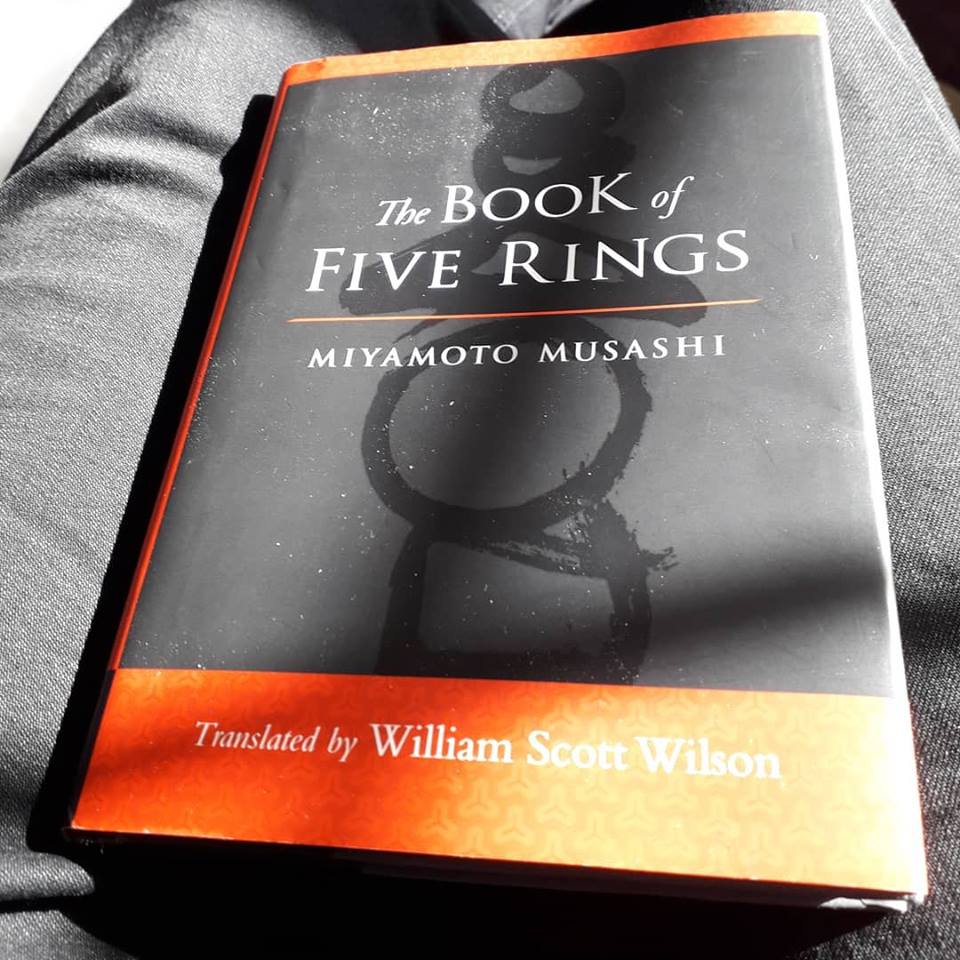
The book of five rings by Miyamoto Musashi 新免武蔵守藤原玄信 is a book I read about once a year. The excellent version I have on my lap is the one translated by William Scott Wilson. For those who don’t know the book, it is understood that it comes from Pamphlet by the same author.
The context was to apply for a position teaching for someone of high rank, and you had to construct a sort of CV detailing what and how you intended to teach. A lot of consideration was given to why you may teach something in a certain way, significantly if your concepts differed from the standard ideas. So, this book can be seen as a sort of manifesto, selling the authors skills.
What we got from Musashi is a fantastic insight into how a warrior thinks and may also live his life. Musashi stated that he had fought starting aged 13 and won 61 sword fights, then he retired. The lecture I attended a few years ago noted that he authored this book after his dualling days.
Most of us martial artists these days are unlikely to be involved in duals to the death, but we can still use the books’ information to understand how to approach training for that event. It’s an excellent way to cross-check yourself first as a martial artist and how you live your life and practice and develop other skills.
To quote Mr Wilson: The book gives timeless advice with regards to defeating an adversary, throwing an opponent off guard, creating confusion and other techniques for overpowering an assailant that will resonate with both martial artists and everyone else interested in dealing with conflict.
The book does that and much more and is a recommended re-read each year. I use the strategy in my daily work life (Asset Management), and it works. I am a global award winner for my work, and this book played its part in that.
This blog’s primary goal is to talk about the training we are undertaking in our KORA class and help people with their training journey from afar as best we can. The idea is to be positive and promote the benefits of martial arts.
One of the reasons I started a blog was that I realised that I was becoming a bit of a martial arts recluse. The situation is not helped because I retired from teaching members of the public in 2005 and have been quietly researching and teaching in a low-profile way ever since.
Over the last thirty-five years or so, I have helped train professional fighters, soldiers and even some A-listers along the way; for most of that, I am under a non-disclosure agreement, and for those I am not, I keep my word to keep things private. A few people have gone on the record to thank me, that’s muchly appreciated, but that’s very their decision.
A quick view of the about me section details a small proportion of my overall experience, and hopefully, it shows how grateful I am for my past and current teachers and martial arts friends. I commit to give credit where credit is due and also be transparent.
In my research group, we study two different core activities: first, under the KORA banner, we study MMA, Grappling, Sword and Dagger, full-contact stick fighting and Savate with a Basque flavour. Separately in a closed-door class, we study Pukulan Sera. I draw on my long-term military, practical, and coaching experience to construct and refine my curriculum and attend regular coaching courses in various fields.
Over the last year, since I started chatting to people on social media and writing my blog, I have had some great feedback, and I guess I got rediscovered. This is great as I made some new friends and even reunited with some old students or their students.
The downside of this is a small element in the martial arts world that resents people’s success, even when the person is non-commercial like me. Some people also resent others getting any form of recognition, still more see other people as a commercial threat. Not great, and if that’s you, maybe you need to do a revaluation of your life.
We also have flimflam merchants who tell a great story and insist it’s their way or the high way. Tell them to do one and train with who you like. I recommend shopping around and trying different coaches and arts.
Next up have the con artists, people who don’t do the work and make false claims. Being low profile, I have mostly missed these guys as there is no point in claiming teaching credentials from someone no one knows. A few of my friends have been victims of this kind of thing in the States, but it’s a new one to me.
I recently found someone who was using my writing but with his name under the title, even using a similar logo. Someone else was copy and pasting my words of advice and posting as if they were theirs, and separately someone else making claims that he was a full instructor under me. Three separate people, all of which I had to deal with. That’s all now been dealt with, and there will not be a reoccurrence from those guys.
I can’t patrol the internet and social media all time; I have protected my logos and the group’s name with these guys: Protect my work.com.
My training partners and friends also keep an eye out for me, and I do the same. If you come across anyone making any claims regarding being an instructor with me or teaching KORA, please let me know. I will be happy to confirm and recommend authentic teachers in other arts or even people.
All of us coaches have a unique way of doing things, and most of us know each other in the UK. It’s, thankfully, a small world filled with talented people.
One quick look at the UK news gives you a good indication of where the knife crime statistics are going. In South London, the local social media is littered with knife muggings, gang-related knife fights, and stabbing games.
“Data gathered and analysed by the BBC found there had been 55 fatal stabbings so far this year (10 Oct 2020). Other findings over the last ten months include that 12 teenagers have been killed – all of them male – while six homicide victims were children aged ten and under”.
So, the question is:
Why is knife crime on the increase?
Why do so many people appear to be carrying knives both for use in crime and for their self-defence?
If we take away some of the social factors that lead to crime use, such as drugs and poverty and consider the knife, we realise that it’s a cheap, easily affordable, easy to carry cancelled option. Blades are also lethal even in a non-trained person’s hand.
The reality of knife defence
Please pause here and take just five minutes to google knife defence training…
What did you see? Dozens of YouTube videos showing empty-handed defence against knives, complete with splendid disarms. I bet for every video extolling the virtues of xxx martial art; there is a counter video posted on how that defence does not work.
Most martial artists disagree about most things but mainly about knife usage and defence. That’s not surprising because most of them have never been in a knife attack and probably know as little as the layman about what happens. The same goes for the local law enforcement, they have the training, tasers and stab-proof vests, and on the rare occasions they go head-to-head in a non-pre planned operation, they often come off second best.
Those of us who have been involved in knife crime as either the perpetrators or victims know that any knife attack is probably one sided. If the attacker has the intent to harm, he will likely succeed with a mixture of speed, surprise, and ferocity.
So, the answer to the first part of my question is that knives are easy to obtain, easy to conceal and use if you have that kind of intent. That makes them very useful in acts of violence connected with criminal acts.
The issue is that most teenagers living in London understand all of the above points. That realisation leaves them in a huge dilemma. If you know that your immediate social group has knives and uses them regularly during the violence, you must consider your safety. You may have even already seen or been a victim of knife crime and know that running away is often not a viable option.
It must be very tempting not to consider carrying a knife yourself, just to provide some sense of protection. I think this is why we see so many young people carrying knives for protection. If you carry a weapon, you will likely use it if you can—a life-changing moment for you and your assailants.
I have an excellent example of this; in the early eighties, I had a good friend from the local boxing club, we will call him George, a made-up name, but the story that follows is all true. George was a nice guy, and when he walked into his local pub, he was not carrying a knife and only intended to pop in for a post-work pint. While queuing at the bar, he noticed someone semi slumped over the bar, half seating on a bar stool, half hanging from the bar.
Somehow the two of them got into a conversation, friendly at first until the stranger, clearly drunk, got increasingly aggressive. Threats were made, George felt off-balance, and now the stranger was looming over him with his right arm pulled back to throw a punch. George stuck out with his right hand to the stranger’s face, and the stranger crumpled to the floor.
George became aware of a tingling in his right hand and noticed that it was deeply cut. He had inadvertently punched the stranger with a pint glass in his hand. After he was sentenced with causing Actual Body Harm (ABH) and jailed, I spoke with George, and he explained he did not even realise he had a glass in his hand.
I suspect that deep in George’s subconscious, he knew he was facing an immediate threat, and in some fight or flight mode, it grabbed the nearest weapon. Not great, and two lives ruined.
So we have two groups wondering our streets, one set on crime, using something that is a readily available equaliser, that does not require training to use, the other fearing for their life and carrying a knife for self-protection.
Somewhere in the middle is you.
In part two, I will discuss what I think is the best ways to avoid and stay safe from knife crime.
I guess the answer most regular readers of this blog would give is, yes, martial artist. I would say it depends on what I am doing and its context. When I was growing up, I had easy access to Boxing, grappling (Judo/Wrestling) and fencing tuition. I did not consider myself a martial artist, mostly a sports person with some self-defence fringe benefits.
The Martial Artist
When I joined the UK military as a soldier in the early eighties, despite the fact I was training for warfare, including close quarter battle and even later as a freelancer in a full-blown war where the body count was high, I did not consider myself a martial artist.
We should also consider a section of our society that mainly focuses on self-defence and training for that situation. Many of my friends who train in Combatives prefer a stripped-down meat and potatoes approach and do not consider themselves martial artists. I tend to agree with them.
A person who is paid to train in or teach a martial art full time is a professional martial artist and probably a good person to base the criteria on. This person will probably be working out five or more times a week, with regular pressure testing.
The Hobbyist
When we consider people who train in actual martial arts, it gets even trickier to define. I would suggest someone who trains twice a week in a regular class is nearer to a hobbyist. Slightly different if the same person trains five times a week, either in or out of class. An extra level of commitment.
The Researcher
We have researchers, and with them, it really about what’s being researched. You may choose to study a martial art like I have and actively train in it. You may also explore the history of the art and never actually train a single technique. There are also the technique collectors, with folders full of techniques but zero practical hands-on experience.
The Role Player
Role players are another subsection; they tend to operate in a different or altered universe; this can take the form of dressing up or even mock battles or re-enactments. All good fun and hugely enjoyable.
I know and have good friends who fit in with most of the “types” above and even a combination. To be honest, as long as people are happy, I could not care either way.
The big drawback is when you don’t know what you are and why you are doing something. It’s very easy to be drawn outside of your level of understanding, especially on social media and become a spreader of martial myths.
Adam Chan is a martial artist I admire, the first half of this video relates to Wing Chun; in the second part of the video from about 06:40 onwards, Adam talks about some social media misconceptions and also what a professional martial artist is. The whole video is excellent, so please take the time to check it out.
Adam did an excellent job of breaking this down. It reinforces that you should consider who you are taking advice from regarding the martial arts because there are many people out there writing and giving martial arts advice who are not qualified to do so.
Things can go wrong when marketing meets inventive minds, and the main driver is making cash. The best advice I can give is to seek qualified hands-on tuition and use critical thinking to review everything you are told. Yes, you can and should include my writing and teaching as well.
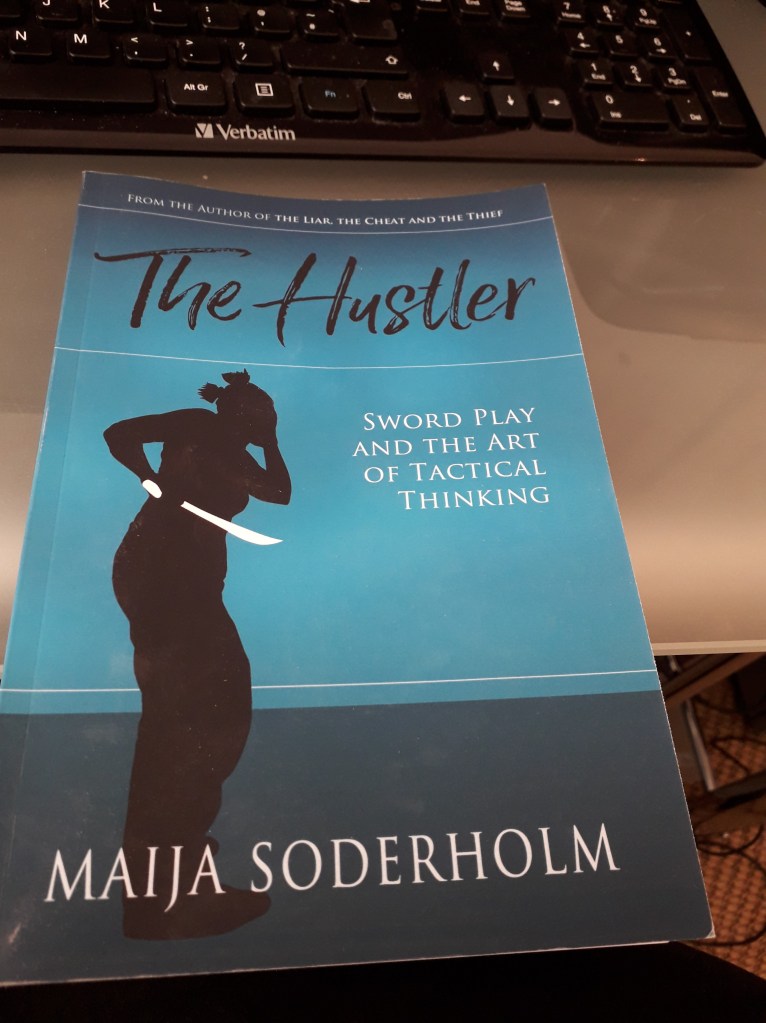
The Hustler – Sword play and the art of tactical thinking is a beautiful book written by Maija Soderholm. A lot of the book focuses on deception in combat, and it’s funny because this book slipped onto the market quietly, and just how good it was has spread by word of mouth among the FMA community that already knew of Maija and her work. I hope this review will change that and open the book to more martial artists from different backgrounds.
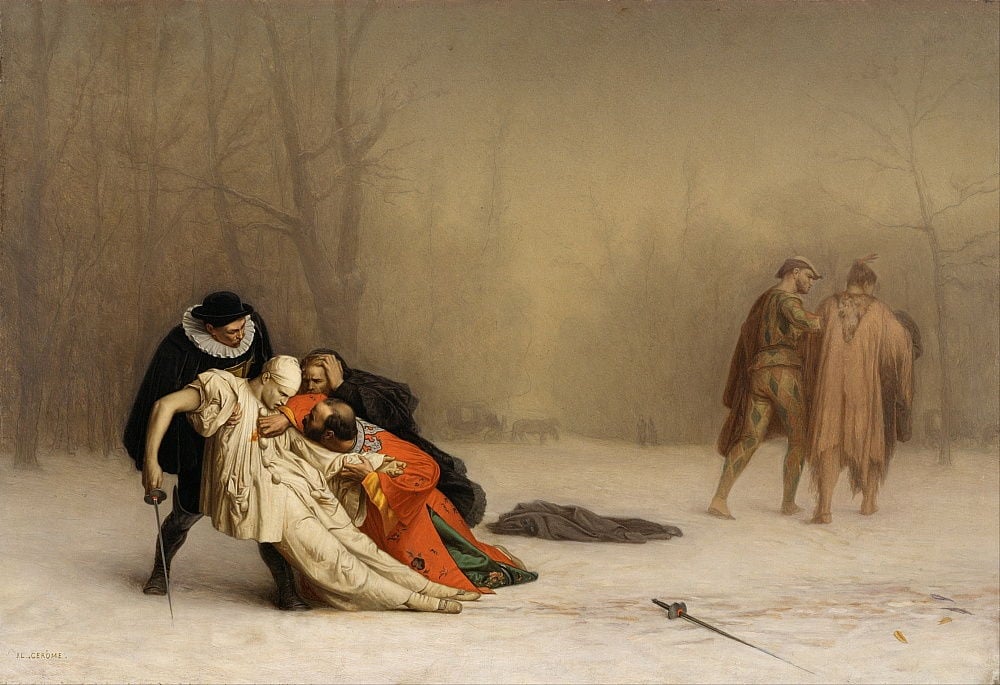
First things first, why would a book on Sword play and the art of tactical thinking be of interest, to say a boxer or any other empty hand martial artist? The answer lays within the context of a swordfight; the sword is relatively unique in the weapons world because it was solely designed for one thing only, to kill the enemy. Most other weapons, such as the spear or knife, have many different uses outside the fighting context, but the sword has a single-use. If you make a mistake in a swordfight, you’re probably going to take a cut, and that’s going to be hard to come back from. Hard to come back from in this context probably means death.
Facing off against an adversary where you both have swords combined with the relevant skill is probably one of the scariest moments in close combat; you have to strike cleanly without being stuck, high skill indeed.
Hit without being hit.
Since 1984 if you joined my boxing club, you would have heard the following advice on the first night and repeated after that, mouth closed, chin down and hands up. They were followed by train to hit without being hit. A fist in the face may not be quite as lethal as a sword strike, but it has the potential to be. It makes sense to learn how a swordsman tactically deals with the combat challenges they face, how they cross no man’s land, how they make clean cuts or stabs and how they get out to safety. You can then transfer that skill to your empty hand, or other weapons work.
This book is so good Maija does a great job of introducing the reader to the fight; there is a real cross over here for all of us. Further chapters include why and how we fight. Strategy, an introduction to the game, how to play that game, and how to train it.
All laid out with easy to read and clear logical sub-sections on deception, leading and reading an opponent. Maija has done a lot of thinking for the reader, and she spells it out in a progressive, exciting manner.
This book is a must-read for all my training partners, and I would recommend it to all of you.
If you choose not to buy this book, please don’t complain to me when your training partner does and uses deception to put three feet of steel through your gizzard or a fist through your nose bone.
Take the hint because, as my Dad used to say, “There is no such thing as second place”!
Most of history’s warriors accepted that you needed skills in stand up, clinch and ground to be successful. It’s been a core concept in my KORA curriculum since it was a mixture of Combatives, Muay Thai and Judo over thirty-five years ago. Whether we seek it or not grappling happens, and when it does, we had better be able to deal with it.
My grandfather used to call wrestling gripping or the battle for grips. Grip strength has been highlighted is every grappling system I have trained in, and because of its direct connection to forearm strength and stability, it has always been something to work on in stand-up arts and weapons training. If you are holding onto people or things, it makes sense to optimise your grip.
Here’s me talking about grips for the knife in 2012.
Since 2012 I have revised a few of my ideas on the thumb on the pummel ice pick grip due to the skill of the Piper guys and in particular the writings of Nigel E. February.
I still mainly use a full grip as I was taught, and when I posted a video on the little bit of Irish stick I was taught; I got a couple of emails about my full grip.
The seam grip
The seam grip is where you have most of your fingers on the stick, but except for the thumb which runs along the stick or weapon’s length, it can be seen at 0:27 on my 2012 knife grip video above.
There are two reasons why I’m not too fond of this grip and why I was taught not to use it by people very experienced in hitting people. The hand is stronger when it’s curled into a fist, and it can take impact better when it’s wrapped together. Secondly, the thumb is the key to unlock any grip on anything. Do a quick check on weapon disarms which involved capturing the limb or hand fighting and you will see the leverage is directed against the thumb. This is cross-cultural, and that’s usually a good indicator it’s based on experience.
I believe the seam grip is a direct invitation to either disarm yourself as you hit or be disarmed if your arm or stick is captured. So, we don’t use the seam grip unless the student wants to. I am sure others disagree, and I am very open to debate.
Grip Training
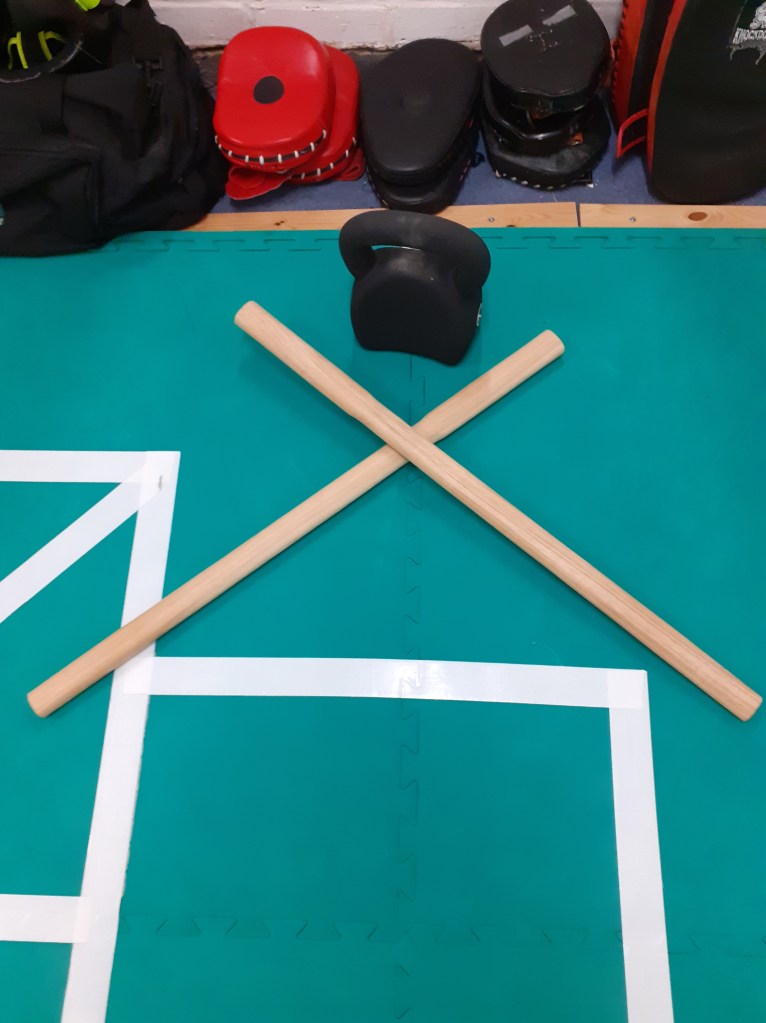
For grip strength training, I use larger and regular sticks and kettlebell workouts. I find I get the best return for my investment time from that. I also grapple a lot under normal circumstances, and jacketed fighting helps a great deal.
If you don’t have access to equipment, you can use a towel or rope to hang from as you pull yourself up or you can do Hindu press-ups, and every time you curve down to the floor, you can grip the floor by trying to close your fingers. As you rise, release your grip. It works best on mud or sand. Whichever training method you choose, please make sure you consider your safety and take competent advice from your coach.
Grip training falls typically into two separate categories, isolated such as grip trainers or inclusive, where you are training a combination of things at the same time like kettlebell swings. You will notice it’s often your grip that goes first.
The video below from the excellent Garage Strength YouTube channel shows some great ideas of both.
Forearm strength and stability is directly connected to the above, and I will do a further post on that later this year.
The kaskarot are the main characters of the ploughd carnivals. They wear hats adorned with flowers, ribbons and colorful decorations on their costumes, and hold two sticks in their hands. Organized in groups of eight, they perform makila-dantza (dances of sticks), as well as danced jumps, marmutx (dance of small sticks), xinple, kontra-dantza (contredanse), soka-dantza, fandango and arin-arin. Alongside the dancers, boys and girls, are the flag-bearer groups, besta-gorriak (red jackets), ponpierrak, kotilun-gorriak (red petticoats), jaun-andereak (gentlemen and ladies), bear and, depending on the village, other characters.
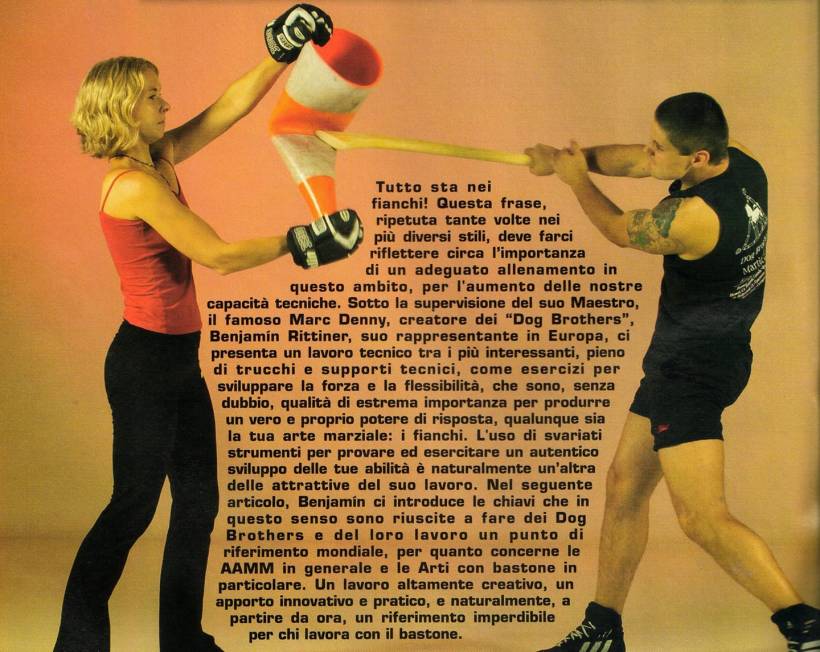
Tired of getting walloped by your training partners in sparring? You may like to invest some coin into Lonely Dogs instructional downloads. Benjamin is a great fighter and coach.
Teddy Thomas breaks through to score France’s first try during the Six Nations match between Scotland and France. Picture: Getty Images
I trained people for Boxing, Thai Boxing, full contact stick fighting and MMA but the greats always had something special. Its not only doing their job well but also with flair. It’s not enough to just win, it’s about doing so whilst demonstrating amazing skill. Teddy Thomas is a great example of this on the Rugby field, wonderful.







 Killick Off Road Arts