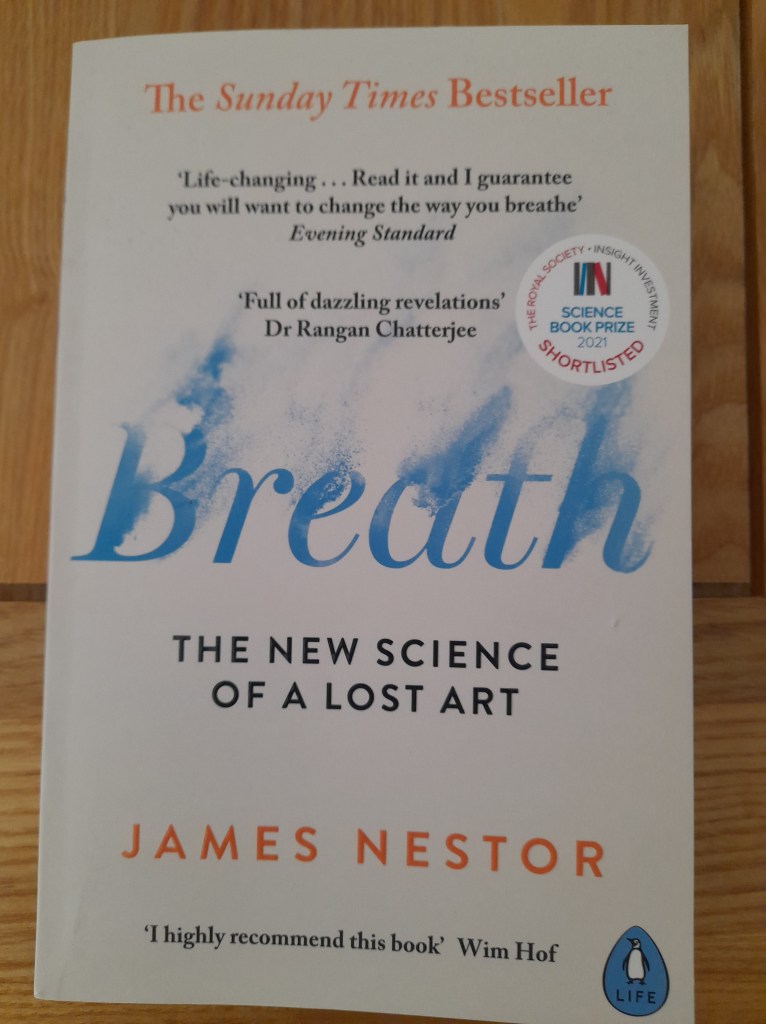
Just read the above book by Jame Nestor, following a recommendation from a researcher friend, and I really rate it for those who need this essential skill. Not everyone has the luxury or good fortune to study Yoga and specifically instruction to breathe like me from childhood, but this book is an excellent primer and will set you off on a righteous path to improved health.
Who needs to improve their breathing aside from the usual list of athletes, martial artists, yoga people, and free divers? Well, everyone.
James does a great job of tracking his hero’s journey as he researches how people have breathed for 5000 years across most cultures and cross-references against how most of us live today. He meets countless researchers, reviews their experiments, takes part himself and concludes the book really well. Basically, my systems secrets are packed with tips and hints within these pages.
So, take a breath and either buy this book online or go to your favourite bookstore. One last warning, reading the book is the start; you have to practice breathing every day.
I have had many inquiries about training post-pandemic, so I thought it would be easiest to post my current class. I currently teach two separate arts; the first is Sera, a Pukulan Silat system. Our branch comes to us via Earnest (Ventje) De Vries and is currently more of a closed door, friends and family tradition. This means that whilst we have to pass on this art, we are just a little selective of the students we teach, nothing more. I personally use the name Sera to differentiate my branch from other branches so that outside people realise our branch is different.
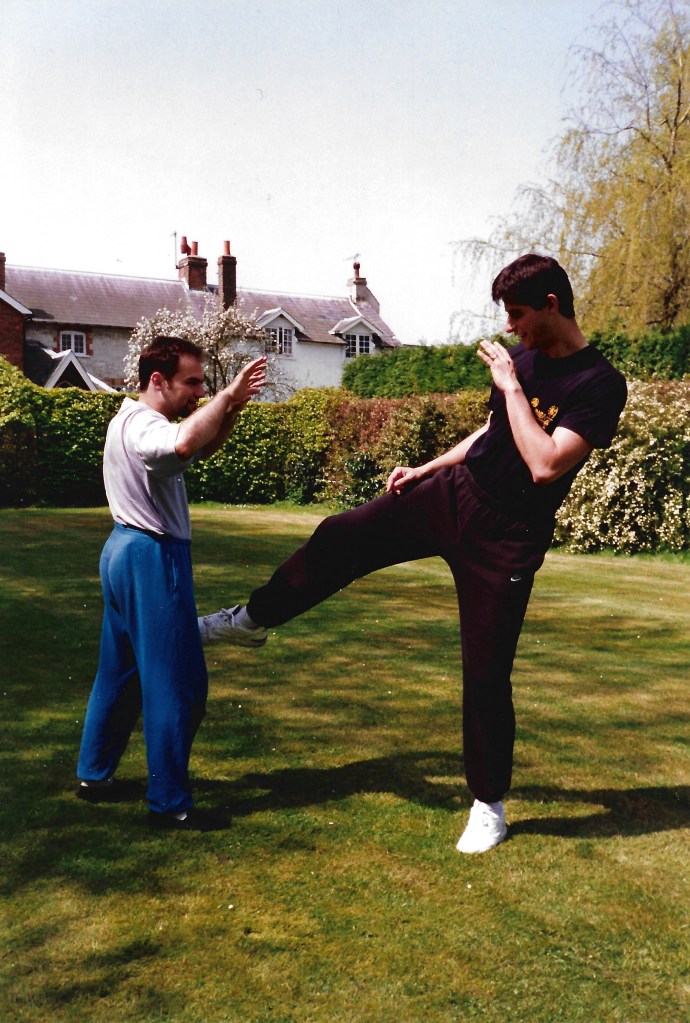
The second art I teach is my own, KORA, which covers my over forty years of Vale Tudo (MMA) experience, Grappling, Sword & Dagger, full Contact Stick Fighting and Savate with a Basque flavour. This class is an open class that I teach both privately and publicly. Over the years, I have taught members of the public and helped a few A-listers. I teach in a private venue but have instructed outside schools to help out fellow instructors and their schools in the past.
Currently, I am the only active instructor, but we have two senior students in the KORA trainee instructors’ program.
From what I can see, our branch of Savate is fairly unique, and along with our sword art, I am dedicated to passing it on.
I post a small sample of our KORA training updates on my Instagram and YouTube channel for my students, which some non-students have found helpful.
If you have any questions, please do not hesitate to contact me.
I spent quite a bit of time researching this from the 1980s, and it soon became apparent that nobody, including the French, knows for sure; most facts are at best an educated guesswork or from the spoken word of mouth. It’s clear there are regional variations and that people may choose to call their art Savate, even if they are in the South of France etc.
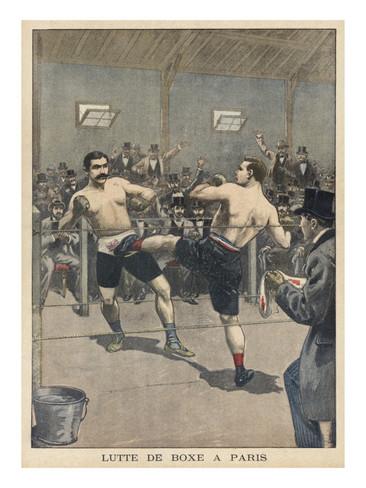
When I researched, the available records were in pictures and writings that suggested that the leading art was the Paris “Gentleman’s” style we often see in black and white photos. There were other versions, but the Paris style was the best recorded and may have been the primary branch. I actually think that there were a few homegrown versions, but they were lost, and many other researchers agree with me.
The other thing to factor in is the movement of people across France, and they may have brought their stylisation of Savate with them to another part of France, Spain or the Basque Country. I did have a few contacts in the Basque region in the late 1980s and early 1990s who have sadly since passed away, and it was fascinating chatting to them about the history and how underground some Savate was.
I have seen old black and white photographs that show people training in various areas of France, and in some cases, I was told that some clubs can trace their lineage back a hundred years.
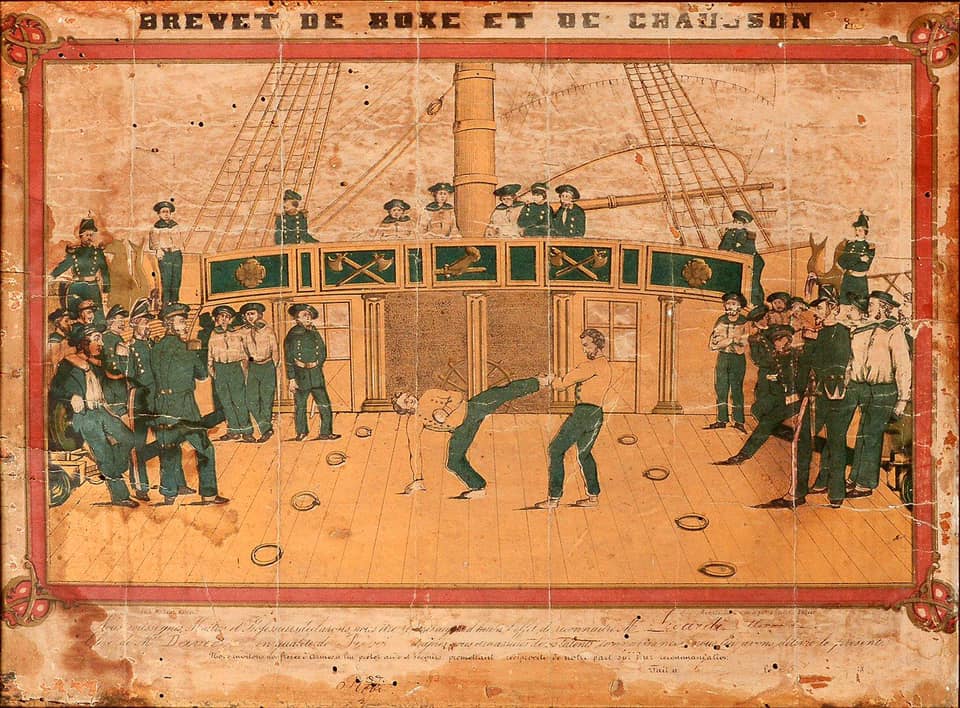
We will probably never know for sure, but I think Savate is homegrown in France and has a unique flavour. It’s very possible that some sailors had a separate art in the South of France, just as it’s apparent the Basque people had their own stylised version.
To sum up, nobody really knows the origins of Savate and whilst it would be lovely to know for sure, the best we can do is enjoy what we have and appreciate other versions or formats. My personal Savate style has been described as rough, and I actually choose to call it by its nickname of Basque Boot as it’s my personal interpretation that my group has successful road-tested over thirty plus years. A comment I often get from my students is seeing is one thing, but feeling is believing.
I can fully appreciate other people’s Savate, and I really enjoy the sports side of things as well. Different facets look really interesting, like the La Canne that I have not studied in depth.
I personally now teach and share the Savate with a Basque flavour that I was introduced to, in the hope of keeping our branch alive for current and future generations.
2021 Started with the group in lockdown in the UK, with several training trips to Amsterdam and Spain cancelled in early January. The only saving grace is some regular zoom classes with our teacher covering aspects of the Sera curriculum. Slowly as the year progressed, we restarted training on a one-to-one basis and then finally as a small group with carefully managed numbers for safety.
I personally managed to log all my solo and group training this year from June to December, 8,750 minutes of training for that period, which my converter tells me is about 146 hours. That’s considerably less than I had hoped for, but logging training time again proved really helpful for me to keep track of my training progress. I also took notes from each class and teaching session on zoom. This is something positive which I intend to continue and can recommend to any student.
The group class training was broadly divided into Sera curriculum training and then my KORA curriculum of stand up, clinch and ground with some weapons such as knife and impact weapons on the return to total activity. We modified this to one hour of Sera training on Saturday, which followed the Sera zoom class instruction on Tuesday during the latter part of the year. Then one hour of my KORA curriculum. Feedback from students and training partners was excellent on this format, with smaller one-hour lessons working really well.
In addition, I restarted my sword training, trying to break forty years of stick training habits, which has proved to be challenging but rewarding. Going forward, I would teach a new long weapons student essential sword work first and then follow up with stick work. The direct opposite of how I learned. Following a period of enforced isolation in August, I managed to finally start to get the basics of sword right and relax a little more.
I also started ground grappling again, working on my catch/BJJ hybrid for MMA.
Positive outcomes for the year are that we managed to get some group training time together, and we all progressed in each discipline. I can now cross-reference my Sword work with my Sera, Savate module, stand-up boxing, and shoot boxing training really efficiently as a coach.
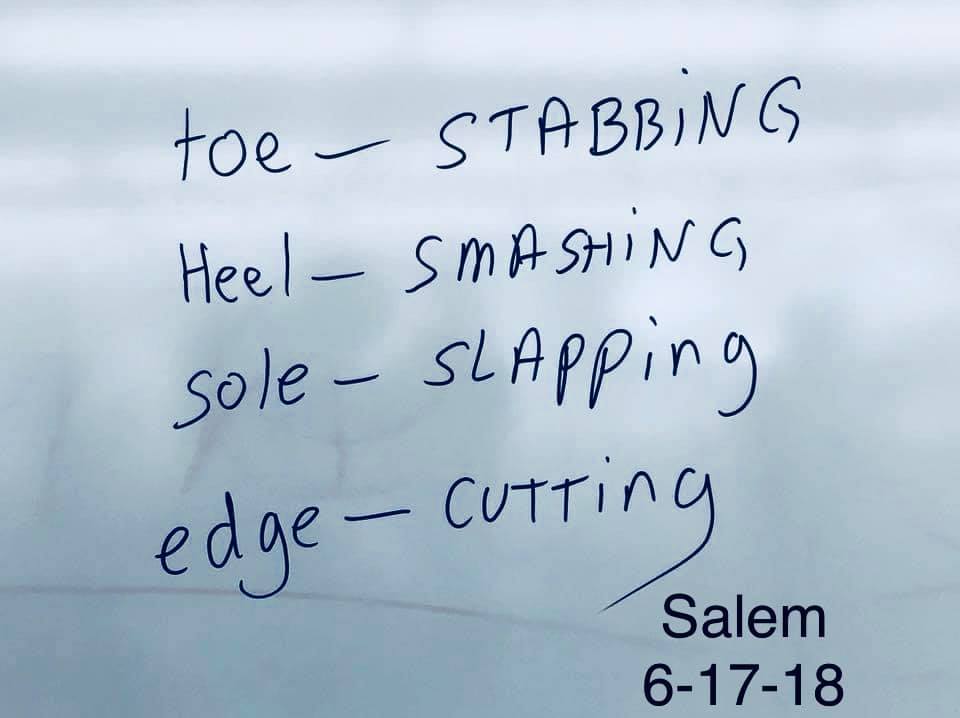
R.I.P Salem Assli, a great ambassador for Savate and other arts. Taking note of what he had to say is one nice way of remembering him and his contribution to Savate and other arts.





 Killick Off Road Arts