Since 1986, I have taught and studied Savate with a Basque flavour. It is unique and beautiful.
It is just one of the arts I try to preserve for future generations. I also seek to pass on our brand of the following arts, all taught as separate classes and areas of study: Contact Management for self-protection, Lutte (grappling), Vale Tudo, Stick Fighting (FMA), and Sword & Dagger.
What some people claim is lost to history and reduced to a note in a book or manuscript, I teach as transmitted to me by my teachers. The often low-profile and close-door arts from England, France, Spain, Indonesia, Thailand, and the Philippines.
The other thing about me is that I have friends in the arts worldwide, and I try to promote them and their work to preserve and share the arts.
I only post reviews of items I feel I can honestly recommend and have personally purchased.
The Latest One
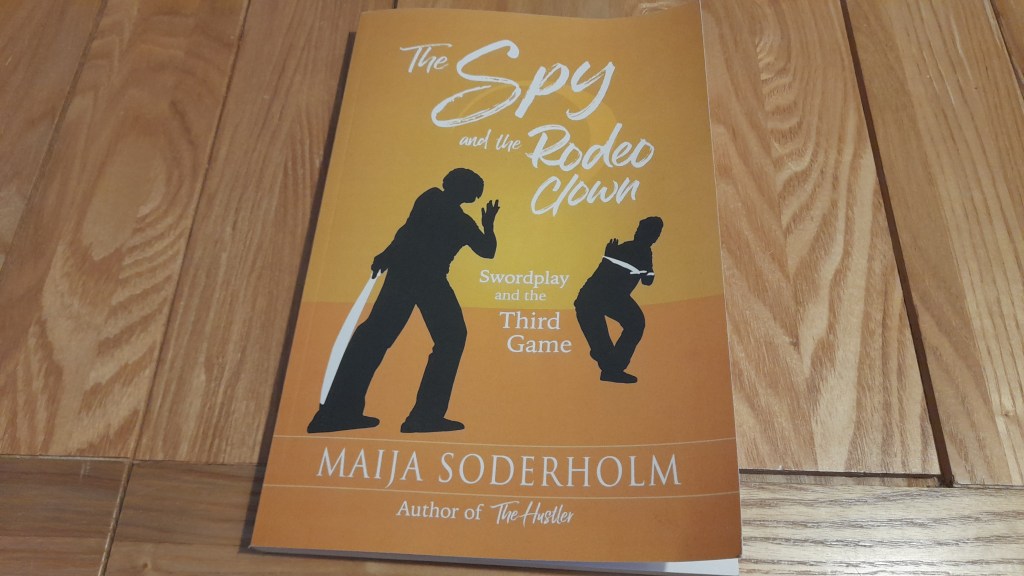
The Spy and the Rodeo Clown by Maija Soderholm.
Swordplay and the third game.
It is slightly premature of me to review this latest offering from Maija, as I am currently only halfway through it. I will post a full review in a few weeks. So far, it has been a great read and an excellent addition to the trinity of books by Maija. I hope all my students and future sparring partners read this book and we can play at a higher level.
The Three
The Collection
The Liar, the Cheat, and the thief.
The Hustler.
The Spy and the Rodeo Clown.
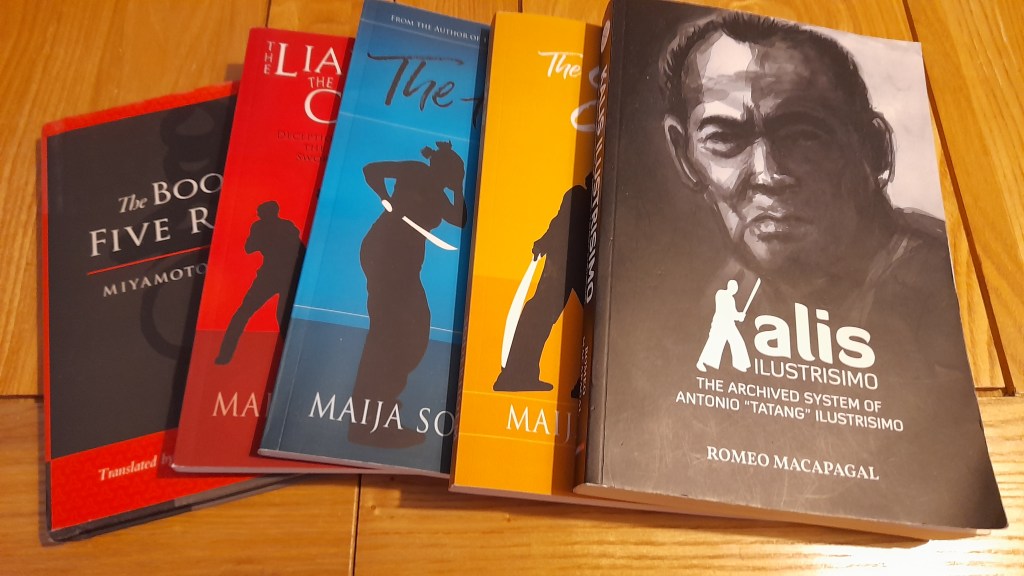
So far, Maija has produced three volumes on swordplay that take a refreshing and clear view of how to prepare and train for sword fighting and martial arts. The clarity of thought and how Maija conveys her expertise are helpful and enjoyable. Further down this blog, you will find my review of The Hustler.
The Fundamental Five
I think These five books are must-haves for students in martial arts, in the order I recommend you read them.
The Book of Five Rings by Miyamoto Musashi is a great starting point for understanding the mind of someone who successfully engages in combat. My translation is by William Scott Wilson. It is ultra-useful for martial artists, teachers, and businesses, with many crossovers. Business is a form of warfare with slightly fewer direct casualties.
The collection above from Maija Soderholm will show you how to set your goals, train, and play the game successfully. It will produce a more competent fighter and martial artist and has many crossovers to all arts, including empty hands and combat sports like MMA.
For me, Kalis Ilustrisimo, The Archived System of Antonio “Tatang” Ilustrisimo, by Romeo Macapagal, is the master textbook on sword fighting and application. It is highly recommended, even for non-Ilustrisimo practitioners and other martial artists. Everything I know is in this volume, and some of the unknown stuff I did not know has been found and confirmed this year. There is a direct crossover with the Spanish Arts and Culture as well.
Reading is a relaxing activity that helps quench my thirst for knowledge and continued performance improvement. The fundamental five are books I reread each year, some I am always reading, and I am consistently applying new concepts that I took from them in live sparring and life.
I hope you find a similar benefit and enjoy the journey.
The second formal class of the year using my new teaching format for each class.
Ilustrisimo Sword
We reviewed one of the most important lessons, Elastico Retirada, which is about controlling the measure and setting up your opponent so that you can cut without being cut. I had taught the top angles of the hourglass the week before, so this week, we reviewed countering the Aldabes, which are uppercut-like motions with the sword.
By the end of the class, the defender could counter diagonal and horizontal cuts to both sides, and we moved to a random feed. I am really pleased with the progress, and my teaching method has improved immensely due to my research trip to Spain.
One of the main benefits of this beautiful and ultra-efficient system is the study of sword and dagger; turbo changes your knife defence. We are unlikely to have to engage in sword vs sword in real life, but knife crime is rife in our area of London, and a few of us have already had to use our skills.
KORA Class
I continued with our Contract Management module, and we looked at controlling the measure, verbally loopholing out of trouble, and, if that fails, taking further action. I showed our secret to overwhelming physical attackers and how to escape the scene.
Fence work and threat assessments are skills that most do not practice often or even upkeep. It is a simple skill set that must be cultivated often to be successful.
Pencak Silat Class
Last week, I taught basic body mechanics for striking, and this week, I added footwork, teaching the two modes of footwork. We then combined both toolboxes. Once you develop the ability to hit hard, you need to be able to move to set up your opponent so they run onto your strikes. You create a collision which triples your power.
Summary
The 55-minute classes are working well and are culturing the right mindset. Having a five-minute break between classes allows the student to rest. Starting with the absolute basics and building on those foundations is working well.
This year, I am targeting our footwork for improvement and looking to improve that in each class. However, the main focus for improvement will be our attitude under pressure and skill set delivery.
The classes are fun and safe, with progressive resistance to build real skills.
Thanks to all who attended the new first class of 2024, yesterday; I hope you enjoyed the lessons and got something to work on.
New group class format
For the first quarter of 2024, we will try a new class format; each class will start on the hour and last 55 minutes. The five minutes between classes will be set aside to ask for any filming for homework, make some notes, and have a general chat.
Class Start times
Except for me, who lives above the shop, most of you travel a fair way to get to class, and I am always grateful that people make an effort and are mindful that it is always challenging to be on time. It is one of the reasons I plan each class in detail; the other is I want to transmit the art as best as possible.
That said, please do your best to arrive five minutes before the class start times.
The change of format and how I plan to teach (more on that later) is directly related to my experience this December in Spain concerning my study of Duende, the Spanish arts and how to teach and get students into the correct learning and training zone.
What we try to perfect
The mindset that drives the correct use of natural and efficient movements at the correct measure, with superb timing. That is a demanding but rewarding objective.
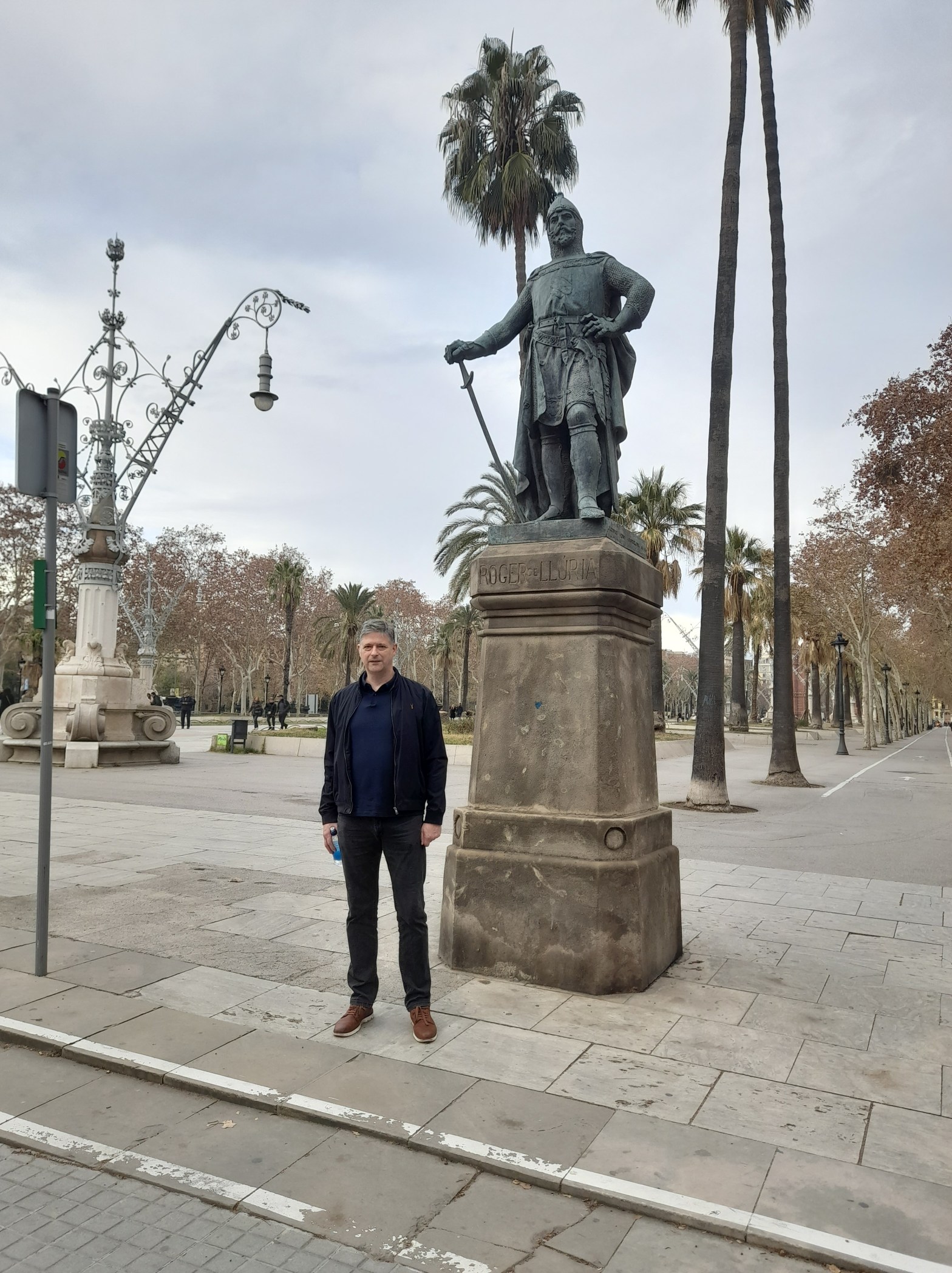
I just returned from a research trip to Spain, and the search continues to understand Duende. Much more later, but for now, here is one idea: So, cultivated fundamentals lead to magic moments.
After a productive research trip to Spain in late December 2023, I had the opportunity to reassess our group’s goals and evaluate the training modules for Sword, KORA, and Pencak Silat. Reflecting on our experiences during the global pandemic, I recognize the vulnerability of our small research training group due to limited membership. Therefore, I aim to disseminate our martial arts knowledge to ensure its preservation for future generations.
Sword & Dagger Class:
Our Ilustrisimo and Spanish sword skill sets comprise a solid foundation. In 2024, we will revisit and reinforce these fundamentals, starting from scratch. We plan to refine our sword & dagger and stick fighting skills, with some members expressing interest in participating in related competitions.
KORA Class:
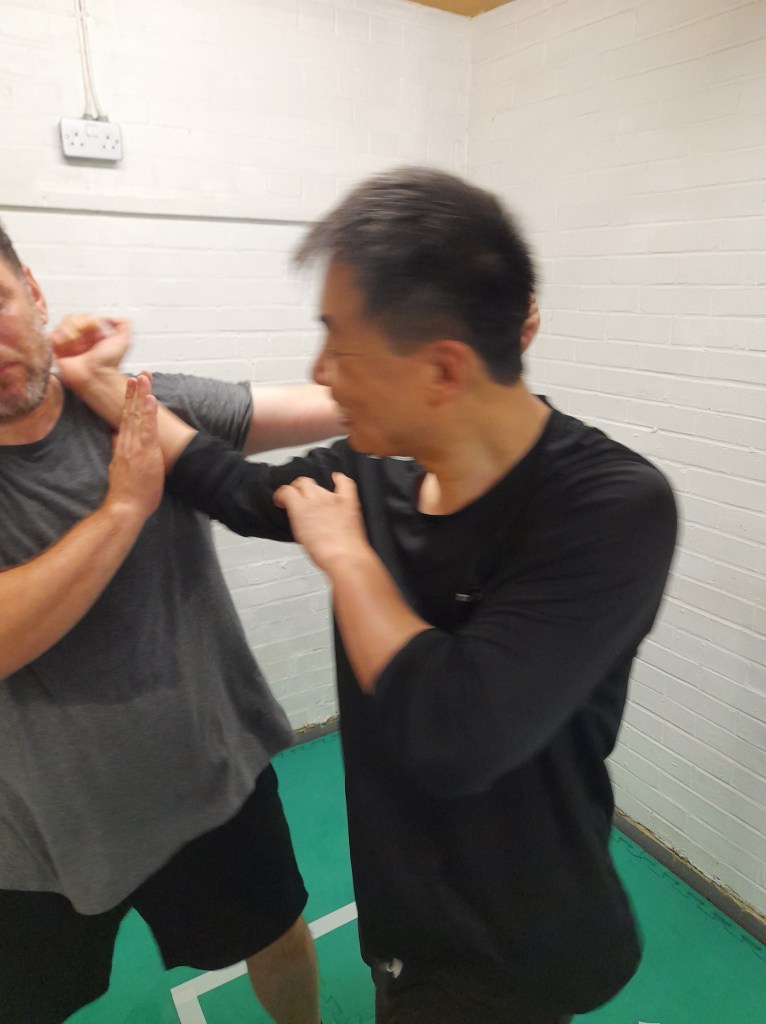
To enhance our skills in stand-up, clinch, and ground techniques, we will conduct a comprehensive review of contact management, Savate, and Lutte modules in the KORA class. Additionally, there is an emphasis on reevaluating dagger defence techniques.
Pencak Silat Class:
Our Pencak Silat class boasts a wealth of detailed information. Our objective is to leverage this knowledge to enhance our practical application skills. We will explore various weapons and examine how they intersect with our other martial arts disciplines.
Instructor Class:
A successful monthly teacher-instructor class, last held in 2022, will be reintroduced to foster the growth of our martial arts community.
Looking ahead, I am excited about a year dedicated to teaching, training, and contributing to the personal development of individuals. The martial arts we practice and teach are invaluable gifts, providing enjoyment and must be preserved.
If any of the outlined goals pique your interest, please reach out.
I want to wish all my active and retired training partners and the many supporters of our training group a very Happy Christmas. It has been a tough year, but we are still here, and training is going very well.
I will be mostly off social media during this period, so I wish you all a happy new year. Looking forward to 2024, both teaching and training.
We will open training spaces in 2024 for the in-demand KORA and the separate Pencak Silat classes.
2023 started with some terrible news as Bancroft, one of our long-term students, training partner, and group elder, sadly passed away on New Year’s Day. Bancroft was an elder statesman of the group and one of my personal friends. He was highly skilled in several arts, including our brand of Pencak Silat; he was also the primary instructor for some of my students and me in Ilustrisimo Sword.
Several students also fell away from training this year due to illness or changes to life priorities, and in a close-knit small training group, this can have a significant effect. I struggled so much with Bancroft’s passing that I considered closing the KORA group. The advantage of a small group is that the training is of a much higher quality than the old public classes I taught until 2005. The disadvantage is that each person’s contribution to the training group is missed even more.
That is a bit of a bitter lesson to learn.
I struggled in the first quarter. Xin Leng kindly took over leading the Silat class for most of the year, allowing me to train and he did a great job. I started a 9 am Sword class on Saturday so that James Cathcart and I could teach the sword work left to us by Bancroft. James is heading up the teaching of sword and dagger outside the group for us and found a great training partner in Mike, who has now joined our three amigos sword class.
Later this year, I lost my long-time friend and old-school Judo coach, Roger Kingshott, so I felt lost again.
Curriculum
I resolved to continue teaching because it is personally rewarding, and I also worked on the sword, clinch (Lutte), Pencak Silat and Savate curriculums for most of the year. We have unique arts where the tool kits do not change, but the environment and our understanding of how to teach them safely and efficiently grows each year.
Research Trips
I managed to slot in a research trip to Spain in March, which was great, but sadly, the September trip to the Basque Country had to be postponed due to a family illness. Planning to redo that early in 2024.
I had the honour of teaching at a retreat where I covered an introduction to our Contact Management module. I found the experience instructive as a teacher as I had to adjust my teaching method to new people. The whole experience was gratifying, and one of the main takeaways was I had almost lost the ability to teach new groups of people, so I had to work on that.
Goals
At some point in the year, I was lucky enough to have a one-to-one review with Dawn Whillock of MAGB fame to discuss my goals for our training group. I use MAGB for my student and teacher insurance and support for running a training group.
It is funny, but in my full-time day job, I am responsible for the asset management of a trillion-dollar wealth fund and people’s pension funds and have weekly goals. Still, in my hobby, I was not using any of those “business” skill sets (misery). After a quick, friendly chat with Dawn, I formed my goals for the rest of the year.
My main goals were to get out more. Hence, I decided to teach at the trauma retreat. I also separately provided some non-profit training to victims of domestic abuse.
I also changed the goals of my KORA group from a bespoke research group to a healthy mix of research and training to pass on the legacy my teachers passed or entrusted to me. I decided to be more open to the public, so I revamped and changed my social media use to help others.
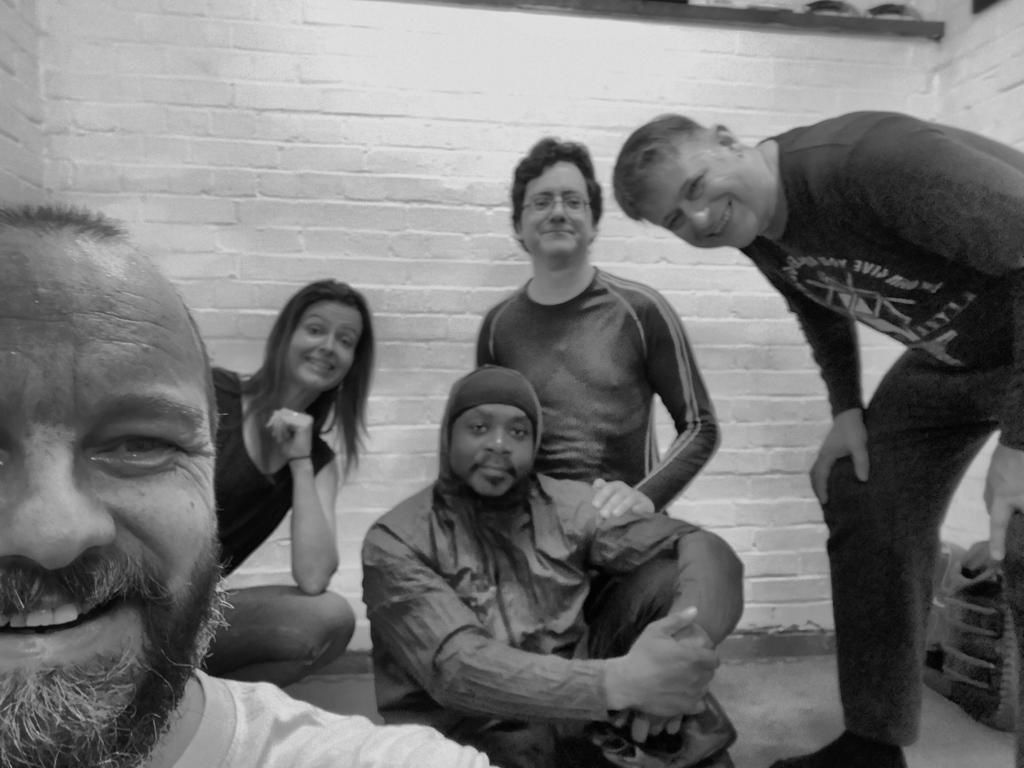
I took part in my first-ever non-work-related podcast, primarily to support my teacher Gillvan and my friend Claudio, and I have invites to three more. I learnt a lot from the podcast, mainly about the importance of good lighting so you don’t look like you are in a witness protection program:
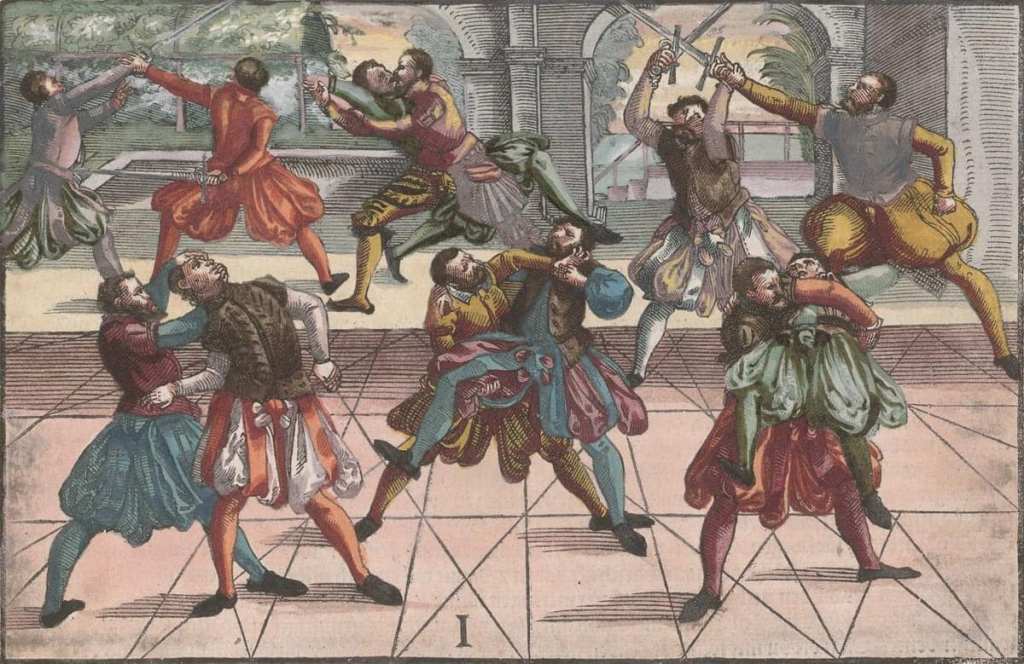
By the end of the year, I was back teaching Pencak Silat, and I feel my teaching ability has improved a lot. I shared a little of my Savate with a unique Basque flavour with some HEMA researchers and helped them better understand the old black-and-white photos from the Savate Paris set.
Our sword fencing group is growing, and we have a very nice curriculum to continue exploring. So much of what Bancroft taught us is proven in the sparring. Next year, we hope to participate in sword and stick sparring competitions.
I have shared my Savate, the grappling (Lutte), and some knife work for the arts that form Killick Off Road Arts. Mike joined our group and is picking things up very well indeed.
2023 proved that nature’s cycle of birth, life and death remains relevant, and how we deal with that is the crucial challenge.
Change is the only changeless state, so embrace it, even if sometimes it tastes bitter.
Every training program has development phases. Once you have been taught the essential toolkit, including basic cuts and thrusts and their defences, tactics, and strategies, you move into the isolation skill development stage to road-test your skills live.
This second stage is critical to building towards the final integration stage. In the old days, we used to teach some basic skills, then jump directly into the fighting stage with mixed results. These days, we spend a lot of time drilling skills. The drills become less set as we move forward towards our goals.
In my class, we have three levels of intensity for any drilling.
Light touch, Contact, Full Contact.
In either case, we intend to contact the target with our cut. We never do air cuts unless we miss.
In each case, we strive to be as accurate and use as much speed as possible. We also want the feeder to react correctly to any counter; eventually, the drill morphs into free sparring.
The feeder can feed the vertical and horizontal lines in the video above. The receiver can counter as they wish, and the feeder may counter the counters. The receiver can also attack first if they see an open line; for instance, hesitation may trigger a cut to a still hand.
The feeder does not exaggerate the technique to make it easy to counter; if the receiver fails, they slow down enough to push the receiver to improve. We do not train the feeder to lose.
The coaching concept can be used in our standup, clinch, and ground games. You can learn a lot from this kind of drilling; in my case, I picked up the following points to work on before I drill again.
Do not swear on video, coach.
Time the rounds.
Do not grab the sword blade.
My footwork is too slow.
The cuts are too slow.
I need to make cuts strong and use the correct body mechanics.
Cardio needs some, well, a lot of work.
We need to get outside or find a larger venue.
Continue to have fun and try things.
Some may wonder why we would publicly show our mistakes and progress, but we know the process has to be honest and authentic to our goals to work. We also enjoy the journey.
Please follow the link for a nice podcast on Pencak Silat with our teacher, Gillvan Van Ham, covering Pencak Silat but valuable for all martial artists and coaches.
The podcast is now live, so please go and enjoy it. Thanks to Claudio Alfarano and Fabio Alfano for inviting us.







 Killick Off Road Arts