Mastering KORA: The Art of In-Person Learning

I designed the KORA toolbox to be taught as a living tradition. By that, I mean that I learned my techniques in person from my teachers and passed them on in person from me. I think in-person heart-to-heart mentoring is the best way to learn any skill, especially one that teaches measure control, timing, and intent.

The joint learning experience allows the student and teacher to grow as the art is taught and react naturally and spontaneously to the rules of the art during plays. This means every lesson must have a fair portion of safe free play. There is always an element of feel and intention training in each play.

For the last six months, in my personal training and teaching, I have tried to focus on the correct intent for each session, which has been hugely rewarding. My students and I have all improved faster, and the resulting skill set lift seems to last longer. Despite the intent to nail the opponents, we still managed to train safely and build the students’ skills and mindset. No one will be getting PTSD from my teachings or a broken body. In fact, we find the reverse is true; we get mentally and physically healthier.

The arts were designed this way.

Regarding supplementary training, I give optional practice homework during each class, and it is up to the student to decide whether to commit to the outside-of-class training. I encourage but leave it up to them because I know not every student wants to dedicate so much of their time to the arts.

In addition to physical face-to-face training, I encourage additional study, such as online training, books, and research that promotes personal growth.

The danger is that in the modern world, a person can study an art online and then start teaching what is likely to be a poor facsimile of the art. I caution against this because I think face-to-face training is the best way. Lately, I have had to help a few instructors who teach arts that they learned online; in each case, they lacked intent, measure control, timing and the correct contact reflexes. It’s easier to help someone with no knowledge than someone with a poor understanding.

So, in my group, we use online training to complement our physical training. Sites like the one below are a great example of where you can pick up great information that turbo charges your path. Tim Rivera has done a great job translating many manuscripts, each a precious gem.

OSONS

https://spanishsword.org/

Become a KORA Teacher: Training & Opportunities

I have had some enquiries about becoming a teacher in KORA, so I thought I would update you here.

Within KORA, we have three basic ranks:

Beginner Students

Depending on previous experience and skill set, moving to the next level typically takes about six months to two years.  

Technician

This person is competent in the basics and can perform them under pressure. Every group class student is different; some have time to train five days a week and take private lessons to enhance their understanding. Doing the set homework helps a lot, but it is optional.

Teacher and Black Belt

This person has trained for about five years and has taken the one-year KORA coaching course; they will be great exponents and have regular in-person teaching experience.

Killick off Road Arts covers the following arts that make up MMA for self-defence:

The Contact Management (Self Defence) module.

Kickboxing, Savate with a Basque flavour.

Grappling (Lutte).

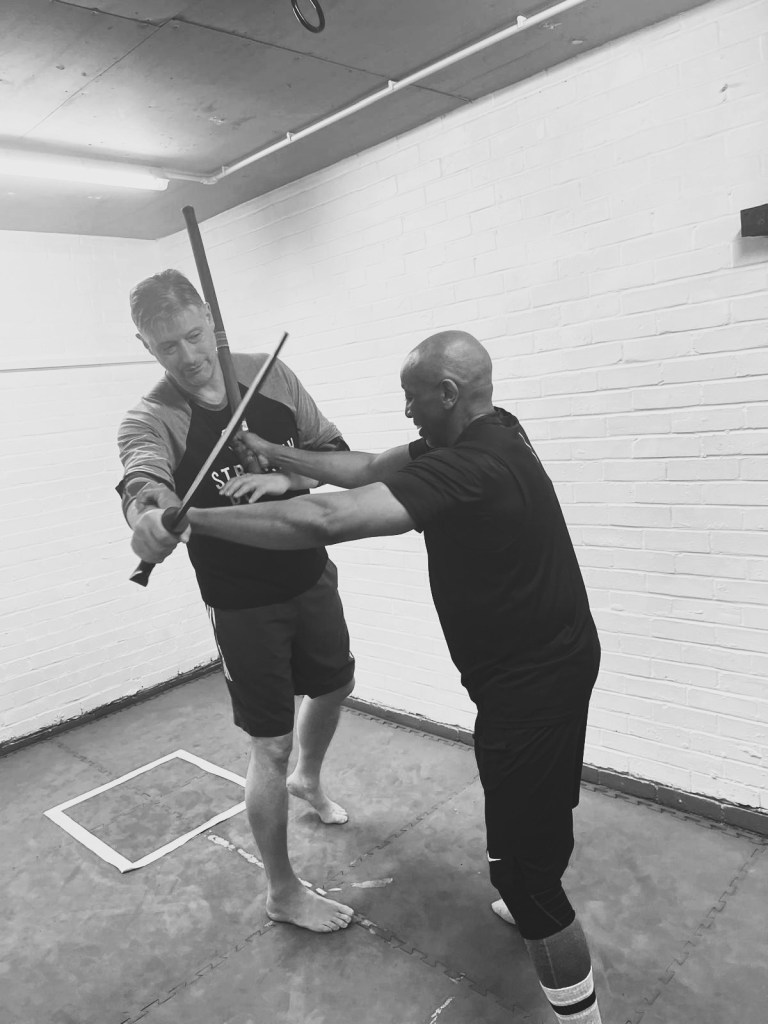
The sword & Dagger and stick class is a separate entity where we teach the bulk of our knife defence system. Likewise, our Pencak Silat class is a separate area of study.  

I encourage our students to choose the art they like, that meets their goals, and that they enjoy. Some study all three areas, while others take just the Contact Management module. We offer group training, private classes, and bespoke workshops for different schools and companies. Feedback has been excellent.

All the arts I teach as head instructor result from direct transmission, not learnt from books, manuscripts, or the internet. This means I have been learning and teaching the arts under the supervision of living teachers for over forty years.  

Training Opportunities

We currently have three empty spaces in the Saturday KORA class, two for the Pencak Silat class and the same for the weapons class. We are happy to support and visit other martial arts schools to teach single lessons or workshops. Please contact me to book an introductory slot.

I am happy to teach people from other arts to become instructors, and I will be providing online training, either in person or via online courses.

New Schedule for Sword, KORA Core, and Pencak Silat

Slightly tweaked the monthly class schedule for the Saturday classes.

Sword  
0900 – 0955
KORA Core
1000 – 1055
Pencak Silat
1100 -1155
Week
SwordSavateStrikes and Footwork1
SwordSavateParries and plays2
DaggerLutteThrows and Sweeps3
DaggerLutteCombined4
Subject FocusSubject FocusSubject Focus5

Each Class will feature

  1. Warm-up of body, mind, and intention.
  2. Tool kit for the day.
  3. Application.
  4. Free play.
  5. Homework.
Knife Defence

Unique MMA Training Methods at KORA

At KORA, we have a highly effective toolkit that can be applied to other MMA schools, however, we use it in a unique and specialized way that sets us apart from the rest. Today, I have been primarily focused on teaching this approach to our students.

Mastering Lutte: Effective Grappling and Striking Techniques

Within the Savate I teach under the Killick Off Road Arts banner, we have a Lutte element that deals with fighting at the clinch and grappling range. This is somewhat unusual as this combination of grappling and striking techniques is often missing from modern systems. From a safety perspective, this makes sense and reflects how the sport has evolved.  

Similar techniques do pop up in MMA bouts, and when I taught MMA fighters in the past, I passed this art on to our fighters, and it worked well. The difference is that in Lutte, the striking considers you will have boots or shoes on.

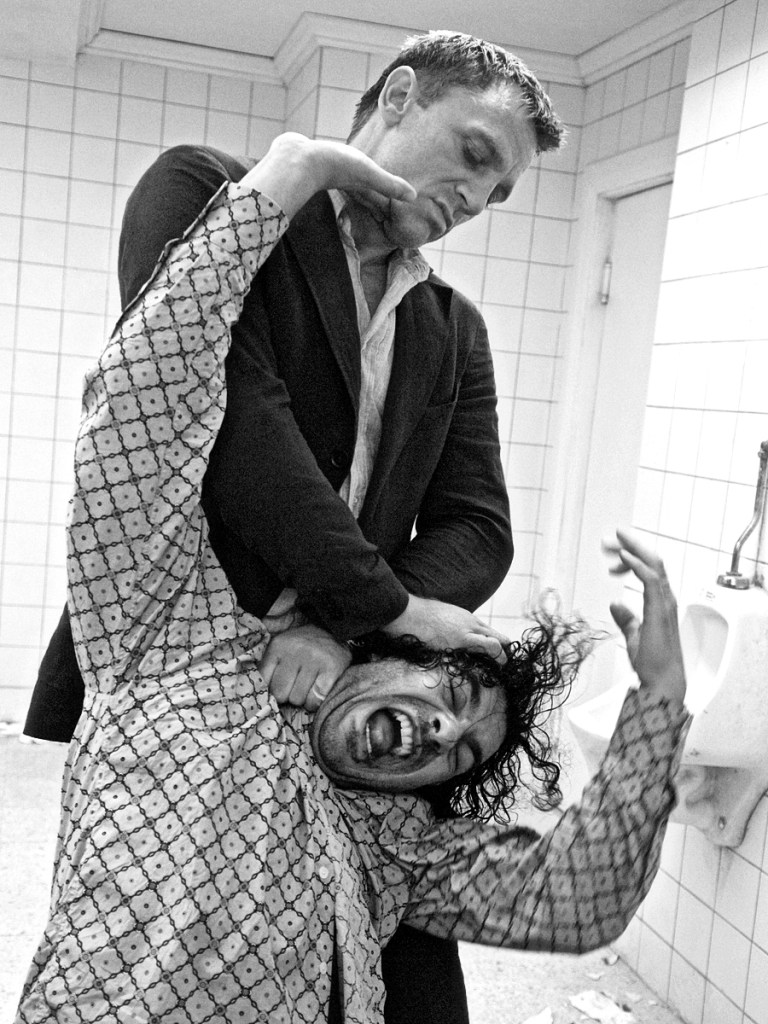
Our Lutte contains headbutts, elbows, knees, punches, boot kicks, sweeps, and throws. It also includes locks and wrestling takedowns, making it ideal for self-defence. 

I teach Lutte by splinting the training into three elements and then combining them. So, I teach grappling, separately from the strikes, and then add weapons. So our students can grapple, strike, and use weapons such as sticks, saps, etc, and we then combine the skillsets together.

I have found that this is the best way to produce strong performance under pressure. The three bases combine well, and we have had great results in MMA, Vale Tudo and self-defence scenarios.

Here is an example from the first lesson, briefly explaining how grappling and striking can fit together.

Master Boxing Techniques for Self-Defense and Sports

Over the last forty years of training and coaching, I have noticed a few patterns that lead to success in fighting, either in self-defence or in sports such as kickboxing or MMA. Boxing hands is one of the best ways to achieve your goals when it comes to overwhelming and knocking out your opponent.

I began formal training in boxing in 1977 and have been incorporating it into my training and coaching ever since. I utilise it in Kickboxing, Muay Thai and MMA. From the mid-seventies, I had a relatively standard amateur boxing skill set, but in 1985, I got to work privately for five months with a sparring and gym partner for Thomas Hearns.

This experience changed how I viewed a boxing match; in the clip below, you will see a fight between Thomas Hearns and Roberto Duran, both legendary fighters; I am a super fan of both. I learned that everything Mr Hearns did from the starting bell was planned and worked out. He totally controlled the fight against a fellow boxing legend like Mr Duran.

Please take the time to watch this short clip because it shows what I try to relay and pass on to my students.

Scary right?

Let your hands go to overwhelm your opponent’s defences.

If you are fighting, you need to hit without being hit by a controlling measure, which allows you to time your opponent. You also need to be able to drop the hammer by passing the defence, and the last punch of the fight would be a great example.

In my KORA coaching group, we blend our boxing skills seamlessly into my Savate for a very sweet and beautiful combination. It has worked well in Vale Tudo, MMA, and kickboxing fights. We have also used it in self-protection mode.

We mainly use our boxing skills for sport but also as part of our self-defence system and are always mindful to note the impact of gloves and hand wraps in our offence and defence. I ensure the student forms the correct fist and uses the proper structure and power base. We primarily train in MMA and the larger boxing gloves to protect against cuts.

Ever mindful of the effect of repeated impacts to the head, we engage in light technical sparring, combined with a lot of hard and fast work on focus pads and bags. I have found that this is the best solution for building a skill toolkit and protecting my students.

I taught the straight right/cross and the lead hook during yesterday’s class. This shows how the correct body movement leads to a slight slip of the head and power generation, then how to drop into what I call the well of power. I also showed where and how to hit the head. Next week, I will blend this with our Savate tool kit.

I teach group and private sessions if you like what you read and want this skill set. If you are based in South London or near our HQ in Purley, Surrey, please do not hesitate to contact me.

KORA Logos

Since 1986, my training group has had several logos, and each one has evolved as we have. What started as a private training group that then became a non-profit community public club, then a research private group, and today, it has morphed into a semi-public group training group with its goal of preserving the closed-door martial arts of Indonesia, Thailand, the Philippines, and the European Martial Arts. None of it was planned, and it has been a brilliant, rewarding journey so far.

From 1986 onwards, the KORA logo.

The 2019 KORA logo.

The new 2024 KORA logo.

Each logo is registered and protected and reflects our continuing pursuit of excellence in the arts we seek to spread.

Cultural Crossovers: Flamenco, Pencak Silat, and More

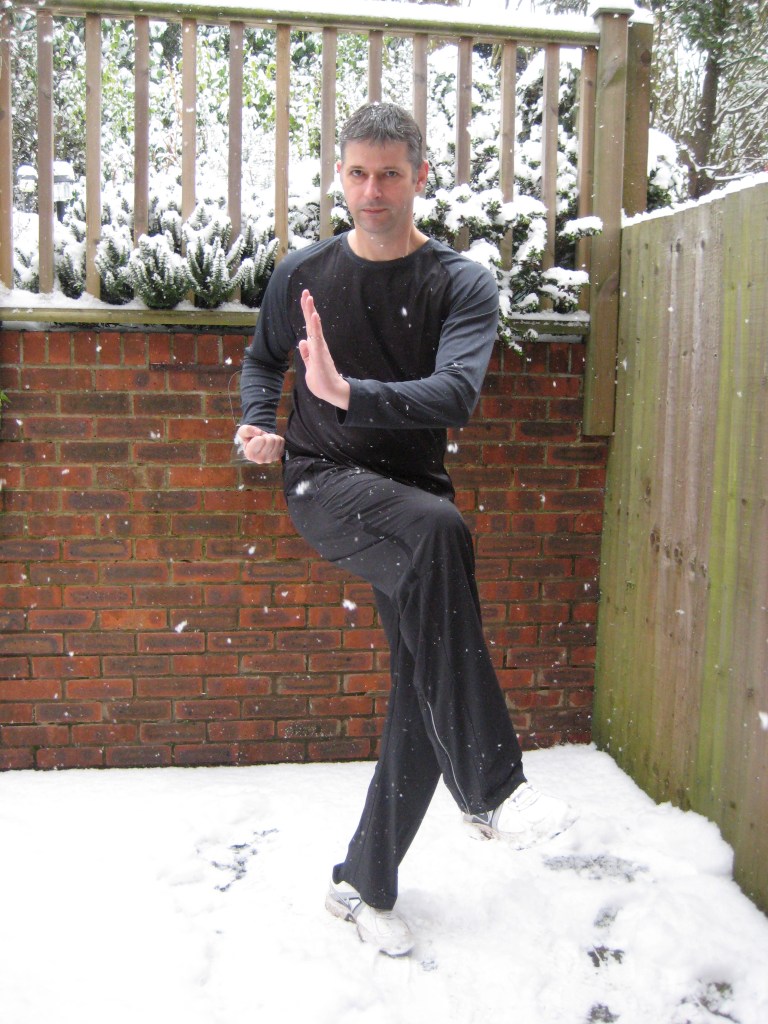
“Is it Flamenco in the snow, or Pencak Silat, or Basque Boot? Perhaps it is all of them. Pencak Silat, like any successful living thing, adapts to its environment. It is possible to keep the core essence, the feeling, and the positive energy while evolving to tackle today’s challenges.” Richard Killick

Class Plan

Sword & DaggerKORA CorePencak SilatWeek
SwordSavateStrikes and Footwork1
SwordSavateParries and Manipulations2
DaggerLutteThrows and Sweeps3
CombinedCombinedCombined4
FocusFocusFocus5

The loose plan for what I will teach during class each week. Going to try it for the next three months.

Regards Rich

Preserving Unique Martial Arts Traditions

I appreciate all the arts and flavours.

Since 1986, I have taught and studied Savate with a Basque flavour. It is unique and beautiful. 

It is just one of the arts I try to preserve for future generations. I also seek to pass on our brand of the following arts, all taught as separate classes and areas of study: Contact Management for self-protection, Lutte (grappling), Vale Tudo, Stick Fighting (FMA), and Sword & Dagger.

What some people claim is lost to history and reduced to a note in a book or manuscript, I teach as transmitted to me by my teachers. The often low-profile and close-door arts from England, France, Spain, Indonesia, Thailand, and the Philippines.

The other thing about me is that I have friends in the arts worldwide, and I try to promote them and their work to preserve and share the arts.