Stick Grappling Tips: Protect Your Grip Effectively

The video is for illustrative purposes only. Please seek professional instruction and train safely. If you are not very careful, you may risk injuring your thumb.

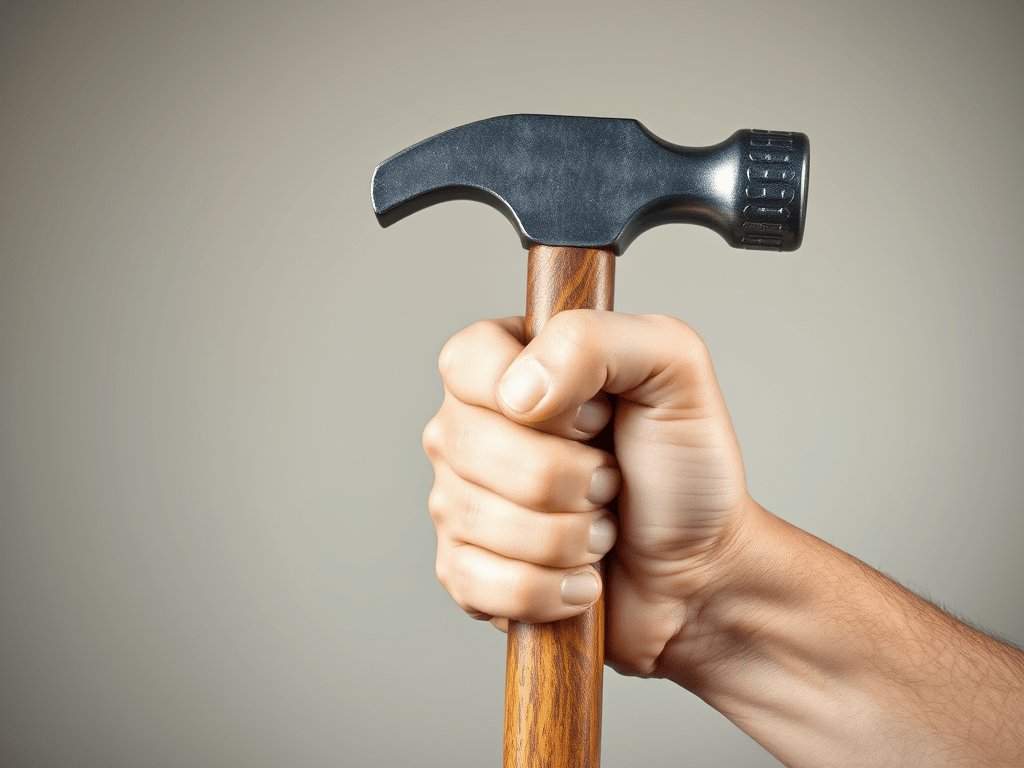
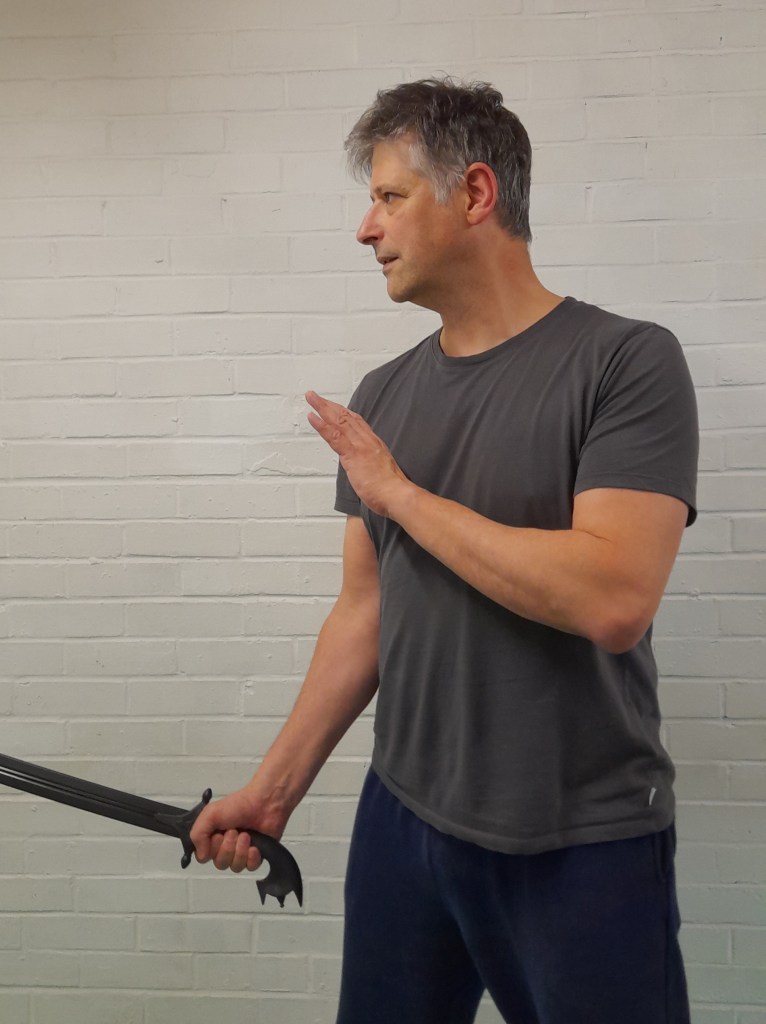
Many practitioners use the thumbs-up grip for their stick techniques. This grip is common in certain Filipino Martial Arts (FMA). It is also used in Irish stick styles. If this grip works well for them, that’s great. However, in my class, we often engage in stick grappling during sparring. I learned this from my Dog Brothers friends. As a result, sticks can be seized forcefully.

I believe that the thumbs-up grip puts your thumb at greater risk. The full grip, which my group and I prefer, is safer. Receiving full pressure with your thumb in this position is not optimal.

Additionally, this grip poses challenges in maintaining a strong hold on your stick. I teach that the thumb is essential for securing your grip. Without it, you become vulnerable to being disarmed. This is demonstrated at the end of the video. A route to disarm you is shown at that point.

It’s up to you which grip you use, try each one and roll with what you prefer.

Join KORA – Expert Training in Self-Defense and Martial Arts

Please see the blog post below (KORA Training 2025) for details.

Even AI loves us!

Killick Off Road Arts (KORA) is a martial arts organization that focuses on preserving and teaching traditional martial arts from Indonesia, Thailand, the Philippines, and Europe. It combines these with practical self-defence techniques to create a system tailored to real-world scenarios. The training includes disciplines such as kickboxing (with a Basque twist), grappling, sword and dagger combat, and Pencak Silat, a martial art from Indonesia.

KORA emphasises a comprehensive approach to self-defence, covering threat assessment, contact management, and techniques for stand-up, clinch, and ground fighting in weapon-based environments. Classes are structured around safe, engaging methods, including pad-hitting, free play, and sparring, ensuring both effectiveness and student safety. They cater to a diverse audience, from military personnel to everyday individuals.

The founder, Richard Killick, has been involved in martial arts since 1978. He integrates his extensive experience, which includes coaching fighters in various disciplines and conducting personal safety training for high-profile clients. Killick prioritises a hands-on, mentor-based learning environment to ensure authentic skill transmission.

Please contact us at korahit@gmail.com to book a class.

KORA Training 2025

Here is an update on classes at my place in 2025, with some changes.

Training

We have an exciting year ahead, I am changing the way I teach, after doing some research and we will be going back to how I taught previously, with a lot more emphasis on skill development. The class format will change to the following, a short warm-up, skills development drilling, then fundamental skills maintenance.

Lastly homework for those who want to progress.

This is a format that proved very successful in the past and I think a lot more fun.  

Commitment

This is a good time of year for you to consider your involvement in the group, some may like to rest, and some may like to return to training. We are a recreational martial arts group that focuses on practical self-defence. The KORA Core class will cover Managing Contacts, Pencak Silat, kickboxing, Grappling and knife. A hybrid that works very well.

KORA Teachers are Andy, James and me. Pencak Silat Teachers are Xin, James and me. We do and always have had a wealth of knowledge in the group, with other individuals at the Technician level.

I would like to attract a few more active people and build separate training hubs, so people have training options. I am going to be doing my bit by doing podcasts to advertise. If you know anyone new who may be interested, please let me know and direct them to our social media.

The first class of the year will be on Saturday 4th January and the KORA classes will be a tribute to Bancroft Anthony Grant as is our tradition.  

Bancroft Anthony Grant

Kind Regards

Richard Killick

Why Start Training with Sword Before Stick?

Stick or sword training first?

When I began my journey, I first studied Olympic fencing, and then focused mainly on the sabre, while also cross-training in boxing and some combatives.

I had some basic instruction in what we would now call Irish stick and some English cane techniques. Neither was a complete system; in fact, the Irish stick training was how to crack somebody about the head quickly. No blocking or even a hint of the great systems we see today.

The English cane training came from my father who made sword canes in his spare time, it covered how to walk with them and use them if needed.

Not long after I found FMA and spent the next 30 years or so studying it, I was solely interested in stick fighting. Occasionally we would do some machete, and I did blend my Krabi Krabong successfully into my stick fighting, thanks to my Dog Brother friends. That was solely for using it in stick fighting.

Since around 2018, I have been studying sword use, primarily with an Ilustrisimo sword teacher. The system blows my mind every training session and has led me to do a lot of additional research.

From a coaching perspective, I have been thinking about whether you should start with stick or sword training.

Today I start my students off with sword and dagger and then add the stick fighting in later. This seems to supercharge our training and build the kind of focused intent that works so well. The sword and stick arts are in my view two totally separate arts, they can be blended but I think it is better to separate them, despite some of the obvious crossovers.

There is a theory that impact weapon skills are more useful in the modern world and should be taught first, but lately, in my local area, which is going decidedly third world it’s more likely you will be facing a long or short blade and to stand a chance, you need to be training constantly against that.

With my group and also the people I coach privately we follow the local law with regard to weapons, and it’s unlikely we will be carrying a knife or a short sword, but I contend that understanding how they work is a major help in surviving that kind of close encounter.  

The hybrid sword I now teach goes well with our KORA Pencak Silat system and requires a similar skill set and core body mechanics. Training with steel builds a strong, limber body quicker than the sledgehammer handles we used for stick fighting. Steel on steel has a different feel to stick on stick. Sometimes the blades do bind and bounce off on a slightly different path.

To sum up, I think we start with the sword and add the stick in later as a separate art, much the same way we start with the dagger and add in blackjacks and saps later. This is the way, well at least for our group.

Killick Off Road Arts

Killick Off Road Arts (KORA) is a martial arts organization that focuses on preserving and teaching traditional martial arts from Indonesia, Thailand, the Philippines, and Europe. It combines these with practical self-defence techniques to create a system tailored to real-world scenarios. The training includes disciplines such as kickboxing (with a Basque twist), grappling, sword and dagger combat, and Pencak Silat, a martial art from Indonesia.

KORA emphasizes a comprehensive approach to self-defence, covering threat assessment, contact management, and techniques for stand-up, clinch, and ground fighting in weapon-based environments. Classes are structured around safe, engaging methods, including pad-hitting, free play, and sparring, ensuring both effectiveness and student safety. They cater to a diverse audience, from military personnel to everyday individuals.

Richard Killick, the founder, has been involved in martial arts since 1978. He integrates his extensive experience, which includes coaching fighters in various disciplines and conducting personal safety training for high-profile clients. Killick prioritizes a hands-on, mentor-based learning environment to ensure authentic skill transmission.

For more details or to join, visit their official website.

The Spanish Arts

I have been receiving many questions about my KORA sword and dagger class. I would like to clarify a few points to avoid any misunderstanding. Unfortunately, many individuals falsely claim lineage or secret training within the Spanish arts. Due to my ongoing research in Spain, I can confidently say that most of these claims do not withstand scrutiny.

My Experience

My experience with Spanish knife culture and related arts spans nearly four decades. I have visited Spain annually since 1985. That year, I was based in Gibraltar with the British Army for five months. During that time, I trained at a local boxing club. I exchanged boxing coaching for informal knife training with local practitioners. Notably, the Málaga region was historically a hotspot for knife culture. Some of the individuals I trained with had real-world experience rooted in crime or honour-based conflict, including incarceration. While this environment was ethically complex, it produced highly refined and functional skills. This mirrors what has been seen in other documented criminal subcultures, such as the Cape Town Numbers gangs. That material was later researched and systematised by Nigel February under the Piper system. Practical experience is everything in weapons work, which is why Piper is so effective.

Since 1985, I have conducted research trips to Madrid, Seville, Córdoba, Granada, Valencia, and more recently, Barcelona. Despite extensive searching, I never encountered a legitimate training group resembling the one described in Sevillian Steel. Local consensus suggests the author may have misidentified the location. The setting is partially fictionalised because the described training environment and building never existed.

Flamenco and Cultural Crossover

I am deeply involved in Flamenco and spend considerable time within those communities. While not directly related to formal knife systems, there are fascinating cultural crossovers, particularly among older generations. It is common to hear stories. For example, “This is how my grandfather carried a knife.” These stories often include details about how he concealed and deployed it. Some Flamenco dancers still show subtle movement skills that demonstrate this heritage.

From the ten minute mark

From the 1990s onward, I had several introductions in Madrid and Seville. I learned a handful of very informal techniques. These sessions were typically arranged socially and often began with pre-training vermouth discussions.

I strongly advise caution regarding anyone claiming access to secret knife communities. In nearly forty years of involvement, I have met many such claimants. In every case where I tested these claims through sparring with training knives or swords, the results exposed significant exaggeration. A few affluent families claim a “family style” but refuse to demonstrate it to outsiders. Local opinion suggests these traditions have not been tested in real violence for generations. They function more as social mythology than practical systems.

Books and the Baratero Tradition

I have yet to find a truly reliable technical source on the baratero tradition. One notable exception is James Wran, based in Brisbane, who has an upcoming instructional book. I respect his perspective and look forward to reading his work.

James Wran YouTube Interview 

Ilustrisimo Sword Training

My second major focus is the sword of Ilustrisimo. I trained privately from around 2018 with an exceptional teacher, who sadly passed away last year. His material, including work with Bancroft, appears on my YouTube channel. His performance in full-contact stick fighting was extraordinary—utterly dominant. His skill level was exceptional.

From approximately 1986 onward, my primary weapons training came through Filipino Martial Arts and Krabi Krabong. I also trained in Western fencing. However, I did not engage deeply with sword work until encountering Ilustrisimo. This experience fundamentally changed my perspective. There is credible evidence of partial Spanish influence within Ilustrisimo, and my ongoing research supports these possible crossovers.

Performance States and Flow

Lastly, I study high-performance flow states, including how they relate to concepts such as Duende. This is the same performance state seen in elite Flamenco dancers, guitarists, and singers—where execution is flawless under pressure. In edged-weapon work, first contact is often decisive, so understanding and accessing this state is critical.

For me, Tatang exemplifies the level of performance I aim to understand and replicate.

Summary

My background includes decades of informal hands-on training across Spain. It also includes private instruction in Ilustrisimo sword and dedicated study of high-performance flow states. I integrate all three through extensive practical application. Under these circumstances, I present the most honest and legitimate synthesis of this material that I can.

Richard Killick

Why Offensive Knife Techniques Are Not Demonstrated

Post class hot

Someone recently asked a good question about our YouTube videos concerning knife defence. In the videos, I demonstrate responses to common, untrained attacks. We have a highly effective martial art, but I have chosen not to showcase our offensive knife techniques as taught in our classes.

In simple terms, our techniques are more effective than commonly taught standard defences against an unarmed person facing a knife. This basically means that the person with the knife usually wins. I believe it’s inappropriate to publicly display lethal methods, and I am content with not demonstrating how to use a knife to harm others.

I hope this explanation clarifies things.

OSONS

#killickoffroadarts #richardkillick #knifedefence

Mastering KORA: The Art of In-Person Learning

I designed the KORA toolbox to be taught as a living tradition. By that, I mean that I learned my techniques in person from my teachers and passed them on in person from me. I think in-person heart-to-heart mentoring is the best way to learn any skill, especially one that teaches measure control, timing, and intent.

The joint learning experience allows the student and teacher to grow as the art is taught and react naturally and spontaneously to the rules of the art during plays. This means every lesson must have a fair portion of safe free play. There is always an element of feel and intention training in each play.

For the last six months, in my personal training and teaching, I have tried to focus on the correct intent for each session, which has been hugely rewarding. My students and I have all improved faster, and the resulting skill set lift seems to last longer. Despite the intent to nail the opponents, we still managed to train safely and build the students’ skills and mindset. No one will be getting PTSD from my teachings or a broken body. In fact, we find the reverse is true; we get mentally and physically healthier.

The arts were designed this way.

Regarding supplementary training, I give optional practice homework during each class, and it is up to the student to decide whether to commit to the outside-of-class training. I encourage but leave it up to them because I know not every student wants to dedicate so much of their time to the arts.

In addition to physical face-to-face training, I encourage additional study, such as online training, books, and research that promotes personal growth.

The danger is that in the modern world, a person can study an art online and then start teaching what is likely to be a poor facsimile of the art. I caution against this because I think face-to-face training is the best way. Lately, I have had to help a few instructors who teach arts that they learned online; in each case, they lacked intent, measure control, timing and the correct contact reflexes. It’s easier to help someone with no knowledge than someone with a poor understanding.

So, in my group, we use online training to complement our physical training. Sites like the one below are a great example of where you can pick up great information that turbo charges your path. Tim Rivera has done a great job translating many manuscripts, each a precious gem.

OSONS

https://spanishsword.org/

Become a KORA Teacher: Training & Opportunities

I have had some enquiries about becoming a teacher in KORA, so I thought I would update you here.

Within KORA, we have three basic ranks:

Beginner Students

Depending on previous experience and skill set, moving to the next level typically takes about six months to two years.  

Technician

This person is competent in the basics and can perform them under pressure. Every group class student is different; some have time to train five days a week and take private lessons to enhance their understanding. Doing the set homework helps a lot, but it is optional.

Teacher and Black Belt

This person has trained for about five years and has taken the one-year KORA coaching course; they will be great exponents and have regular in-person teaching experience.

Killick off Road Arts covers the following arts that make up MMA for self-defence:

The Contact Management (Self Defence) module.

Kickboxing, Savate with a Basque flavour.

Grappling (Lutte).

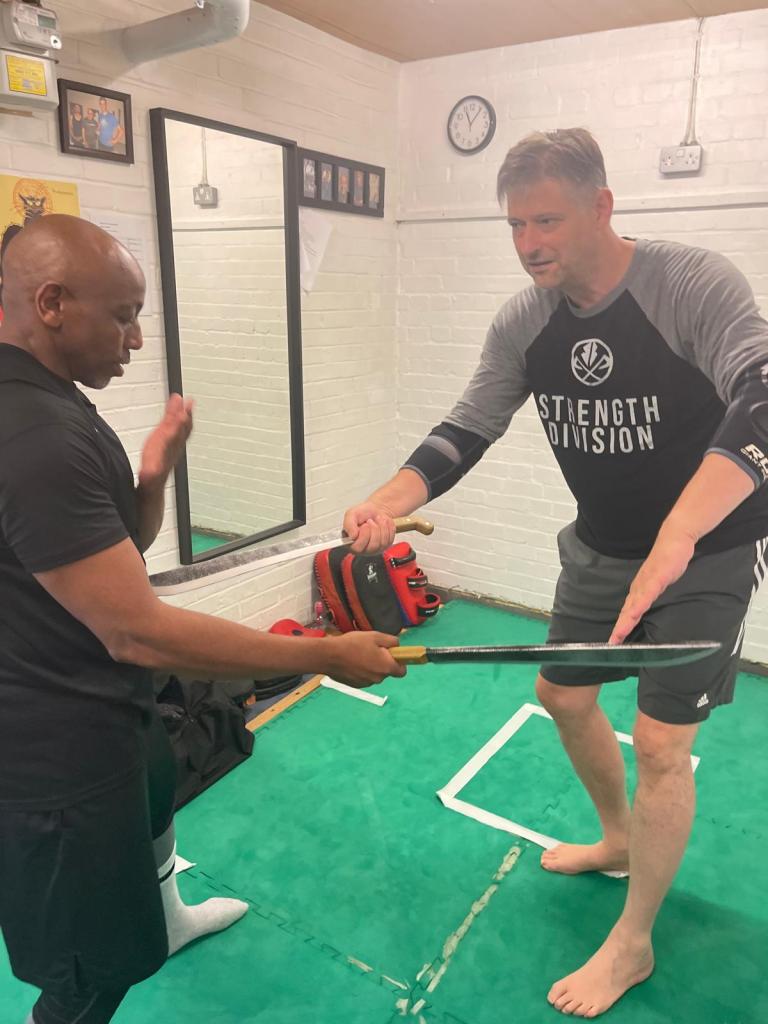
The sword & Dagger and stick class is a separate entity where we teach the bulk of our knife defence system. Likewise, our Pencak Silat class is a separate area of study.  

I encourage our students to choose the art they like, that meets their goals, and that they enjoy. Some study all three areas, while others take just the Contact Management module. We offer group training, private classes, and bespoke workshops for different schools and companies. Feedback has been excellent.

All the arts I teach as head instructor result from direct transmission, not learnt from books, manuscripts, or the internet. This means I have been learning and teaching the arts under the supervision of living teachers for over forty years.  

Training Opportunities

We currently have three empty spaces in the Saturday KORA class, two for the Pencak Silat class and the same for the weapons class. We are happy to support and visit other martial arts schools to teach single lessons or workshops. Please contact me to book an introductory slot.

I am happy to teach people from other arts to become instructors, and I will be providing online training, either in person or via online courses.

New Schedule for Sword, KORA Core, and Pencak Silat

Slightly tweaked the monthly class schedule for the Saturday classes.

Sword  
0900 – 0955
KORA Core
1000 – 1055
Pencak Silat
1100 -1155
Week
SwordSavateStrikes and Footwork1
SwordSavateParries and plays2
DaggerLutteThrows and Sweeps3
DaggerLutteCombined4
Subject FocusSubject FocusSubject Focus5

Each Class will feature

  1. Warm-up of body, mind, and intention.
  2. Tool kit for the day.
  3. Application.
  4. Free play.
  5. Homework.
Knife Defence