I’ve been receiving a lot of emails lately asking what happened to our Facebook page. Unfortunately, the answer is simple—and a bit disappointing. The page is now gone, along with my personal profile and our discussion group.
Meta determined that our content didn’t meet their community standards. I submitted an appeal, but it wasn’t successful. It’s frustrating news—not just for me, but for our followers and for everyone who has benefited from the non-profit training we provide.
That said, it’s not the end. Going forward, I’ll be sharing all training updates right here, so please stay tuned.
We get a lot of questions about what KORA is. A quick dip into Copilot shows this:
Richard Killick is the founder and head instructor of Killick Off Road Arts (KORA). It is a research‑driven martial arts organisation. It is known for its blend of Southeast Asian, European, and “closed‑door” traditional fighting systems. He is widely recognised for his hands‑on teaching style. His historical research is also notable. He developed KORA as both a training method and a community.
🥋 Who is Richard Killick?
Founder, Head of Research & Director of Training at KORA He established KORA to preserve lesser-known martial arts traditions. The focus is on studying and teaching these traditions. These come from Indonesia, Thailand, the Philippines, and Europe.
Experienced across Eastern and Western martial arts His background spans striking, weapons systems, grappling, and historical European martial arts (HEMA).
Known for a research‑first approach KORA isn’t just a martial arts school. It’s a research group focused on exploring how traditional combat systems were used. These systems are reconstructed and trained.
🔺 What is KORA?
KORA stands for Killick Off Road Arts, a name that reflects its ethos:
“Off Road” → unconventional, outside mainstream martial arts
“Arts” → a blend of physical practice, cultural study, and historical research
Core characteristics
Closed‑door martial arts focus These are systems traditionally taught privately or within families.
Weapons training Including knives, sticks, improvised tools, and historical European weapons.
Striking & grappling Influences from Southeast Asian kickboxing, savate, and indigenous arts.
Scenario‑based training Emphasis on realism, pressure testing, and understanding context.
📚 Public Presence & Community
Richard Killick maintains an active presence through:
KORA’s website and blog, which includes training reflections, research notes, book reviews, and class updates.
Workshops and group classes, including annual research reviews and outdoor training sessions.
Social media, where his posts often highlight KORA’s philosophy, training clips, and historical insights.
🧭 Why he’s notable
Richard Killick has built a reputation for:
Bridging traditional martial arts with modern training methods
Reviving and preserving lesser‑known combat systems
Creating a strong, loyal community of practitioners and researchers
Offering a uniquely British, historically grounded approach to martial arts
For someone like you—organised, detail‑oriented, and with an interest in culture and leadership—his structured approach to teaching might be intriguing. Additionally, his creative method of community‑building could be particularly interesting for you.
I receive numerous enthusiastic requests to demonstrate our Spanish dagger system so people can better understand what we do.
We differ from many research groups in that everything we teach is based on direct personal transmission. We do not teach interpretations reconstructed from transcripts or historical fragments. That important work of rediscovery is best left to dedicated researchers. The material we carry was never lost; it simply fell out of common use and, for a time, was concealed from public view during my years living within sections of the local Spanish community where it had taken on darker applications.
We now live in times when understanding edged-weapon methods is an unfortunate but necessary part of realistic self-protection. By understanding the skill set, we can train to counter it, and ultimately protect lives. We do not present this material to glorify violence or for financial gain.
Our KORA Pencak Silat provides the ideal training framework through which we teach and explore this hybrid system, allowing us to contextualise and pressure-test the methods safely and responsibly.
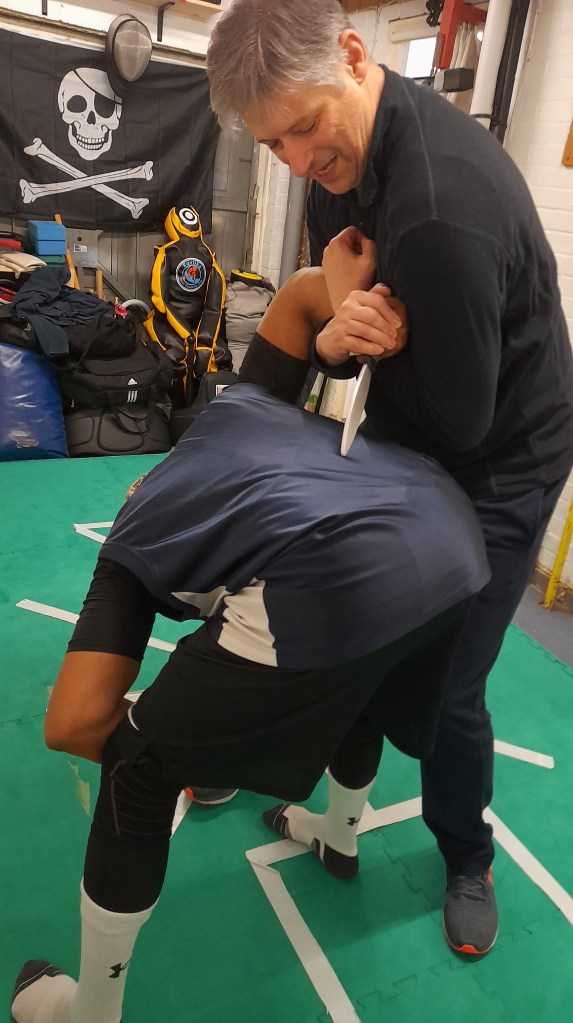
In this video, we demonstrate how we train with the KORA dagger, drawing from Spanish methods, Filipino Martial Arts (FMA), and other traditional systems, such as Pencak Silat.
This is a sanitised version presented for historical research and educational purposes. Much of what was essential to know about duelling had already been established by the 1500s.
The core concept shown here was passed to me through direct transmission in the mid-1980s. The corkscrew motion featured is a fundamental and recurring movement across multiple blade traditions.
A little insight into how I like to teach KORA Savate in our group
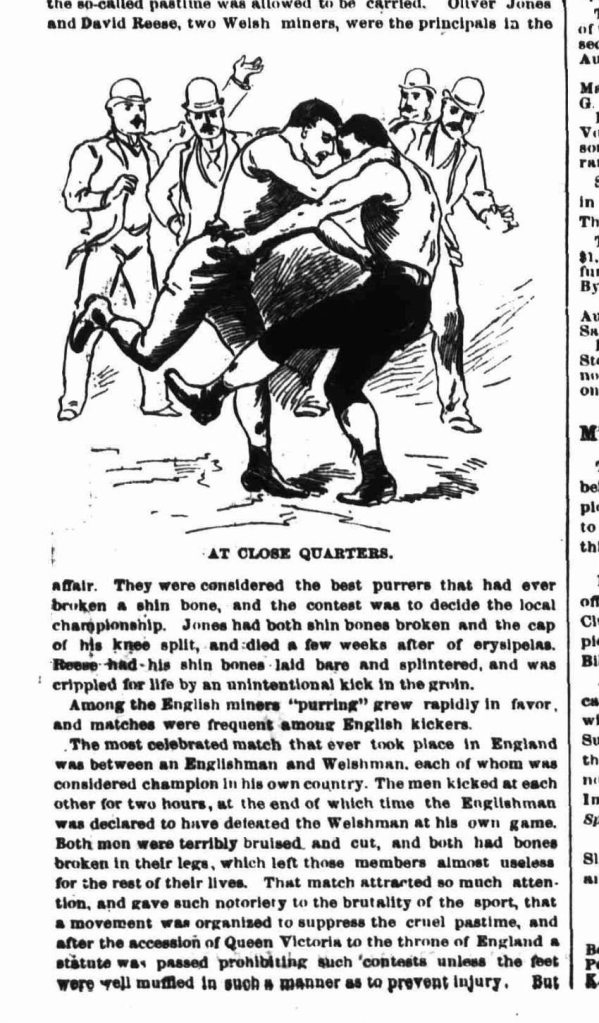
We work with two versions of our low kick. One is a “scrap” kick that ranges from the opponent’s toenails up to the knees. The other is a more classic, chambered oblique kick aimed at the knee and thigh. We focus on attacking the undercarriage. That approach stems from our unique Basque influence. This influence is more earthy and “agricultural” compared to the polished Parisian style you see in the books!
The chamber is often overlooked. Still, I’ve found that it really helps to generate power. It usually gets a memorable reaction. Nevertheless, this style of Savate is tough on your own feet and legs during training. It is not everyone’s favourite. You can end up with feet that look like a ballet dancer’s!
The last bit of this video shows the two kicks. Namaste 🙏is something I say when the kick makes contact, mainly because it’s funny. It’s also called the Savate handshake in our system, because it happens a lot, LOL.
Russ Smith has written what is arguably one of the best “how to teach martial arts” books I’ve ever read. I’ll come back to the book itself later. I also want to discuss why I think you should buy it. But first, let’s talk about the challenge of teaching this complex thing we call martial arts.
My first experience of teaching Combatives wasn’t planned; it was a necessity. I had recently left the Army. I was working on a peace process in a nearby country. This was part of a joint venture group. We had access to a UK Tier One unit and two separate special surveillance units. Our own team, however, was a mixed group of civil servants, analysts, and support staff, including me.
The Tier One and surveillance units operated independently and were based elsewhere. After a particular incident, I was given the responsibility to train the remaining team members. My goal was to bring them up to at least a basic level of Combatives. This training was essential to help them survive in what had become a hostile environment. It was a real mixed bag of people. However, I had my own background in Combatives, judo, firearms training, and some tradecraft. I also had a newly earned assistant boxing coaching certificate. I taught in the same way I had been taught in the military.
Later, in a different job, I realised something important. If I wanted to continue developing my own martial arts skills, I needed consistent training partners. That led me to start a non-profit boxing and Muay Thai club. The primary aim was to compete, but just as importantly, it was to create a pool of committed training partners.
I was aware of my limitations as a teacher. Therefore, I searched London bookshops for a practical guide on how to teach martial arts. I never quite found what I was looking for. Instead, I learned through experience. I channeled my own teachers, people who made teaching look effortless. Gradually, I grew into the role over roughly forty years. If I have a particular strength, it’s that I’m a good planner and a problem solver.
This past Christmas, I was given Russ Smith’s book after seeing him interviewed on GM Dr Mark Wiley’s podcast:
The book is titled Principle-Driven Skill Development (Teaching 101), and it is a goldmine. It covers the who, the what, and the how. Importantly, it delves into the art of teaching, including how to break free from rigid, predefined instructional structures.
The book is full of excellent quotes. However, its real value is deeper. It gives teachers the knowledge that previous generations had to acquire through trial and error. Instead of stumbling along by luck and judgment, Russ Smith provides clear principles. These principles remove much of the guesswork from teaching.
You will benefit from this book if you are already a teacher. Your students will benefit too. Many of them will likely become teachers themselves. I would go as far as recommending that you buy it not just for yourself, but for your students too.
If you are a student reading this, I strongly suggest investing in this book as well. It will help you see the bigger picture of coaching and skill development. You will gain insight not only from a learner’s perspective but also from a teacher’s perspective.
I’m deliberately not giving away the content of the book in this review. I want people to buy it and engage with it themselves. All I will say is this: I highly recommend it.
Happy New Year, and welcome to the 2026 training year at Killick Off Road Arts.
Since appearing on a podcast late last year, there has been a significant increase in interest in our classes. A number of people have asked about adding weekday evening sessions. After reviewing my current commitments, I’m not able to offer additional weekday classes currently.
I appreciate that weekend training isn’t accessible for everyone, and I will continue to review options where possible. We do, however, have other experienced instructors training within our Saturday group, and I’m happy to refer people where appropriate.
The Saturday group classes listed on the Lessons page will remain broadly the same for 2026. One update this year is the addition of expanded dagger work within the Practical Defence class. This addition draws heavily from our Pencak Silat material.
This year will also allow opportunities for me to deliver workshops for external groups. These workshops will be announced here as they are confirmed.
The first class of the year will be this Saturday, 3 January. We already have several new people joining. As spaces are limited, please get in touch if you’d like to join the January group.
Wishing you all a strong and productive year of training.
2025 has been a highly successful year for KORA. There have been clear improvements in student skill, confidence, and overall training quality. I have noticed positive developments in my own teaching approach as well.
During the first half of the year, the primary focus was on improving intention and awareness. This was within the training environment. The highest possible standards of safety were maintained. Classes were structured to encourage focus, control, and thoughtful practice.
I also revised the traditional KORA class structure. Following the initial warm-up, sessions now begin with new or more complex material, when students are freshest, before reinforcing core foundational skills. This approach has significantly improved skill retention and technical understanding.
Class Structure & Focus
This year, MMA and kickboxing were moved to private sessions, allowing group classes to develop greater depth and clarity. In the latter part of the year, KORA focused on the following dedicated classes:
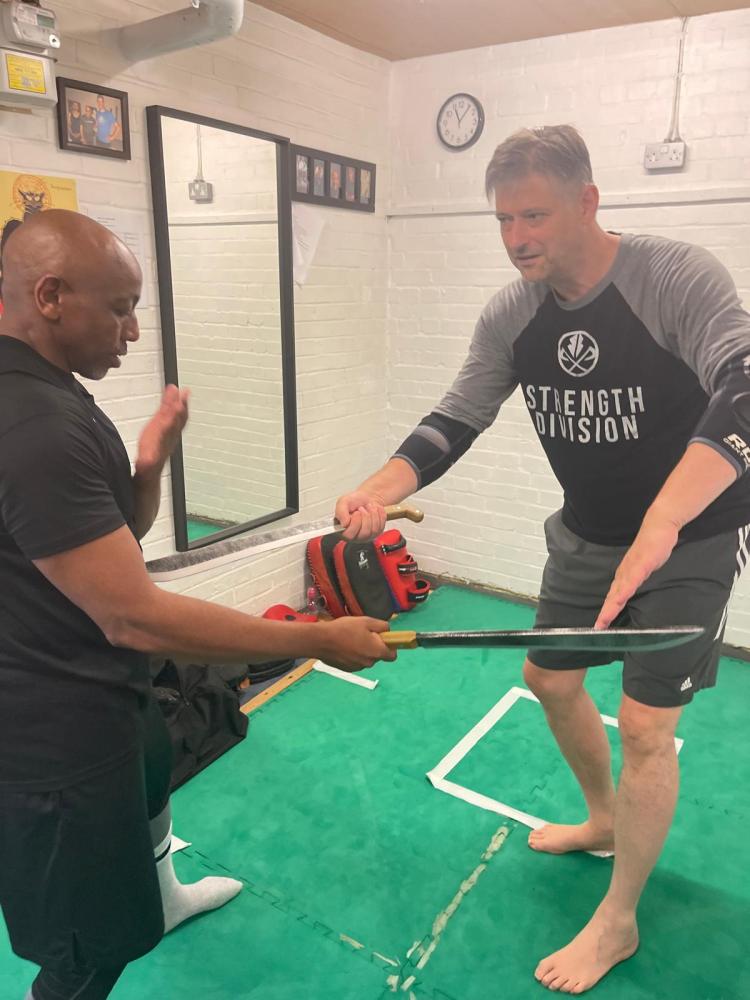
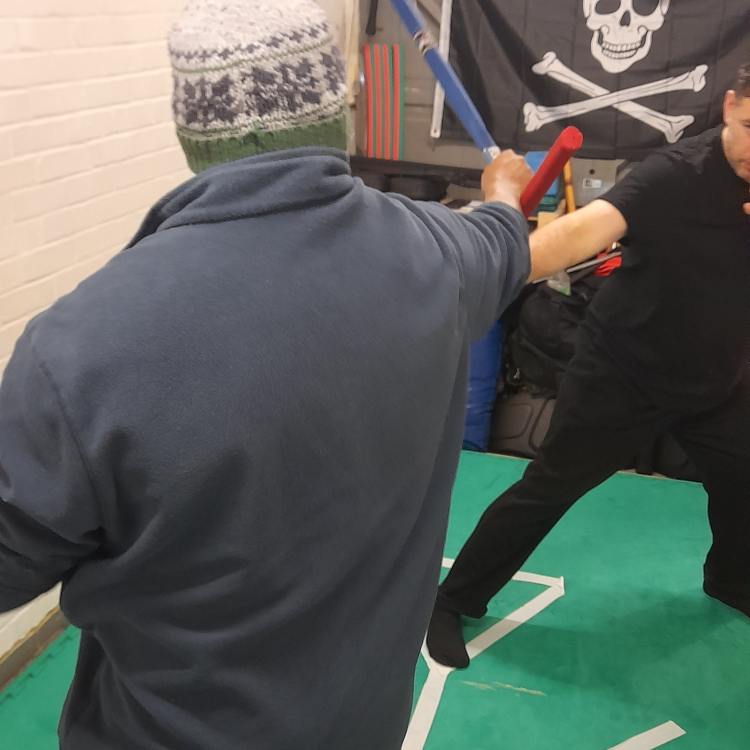
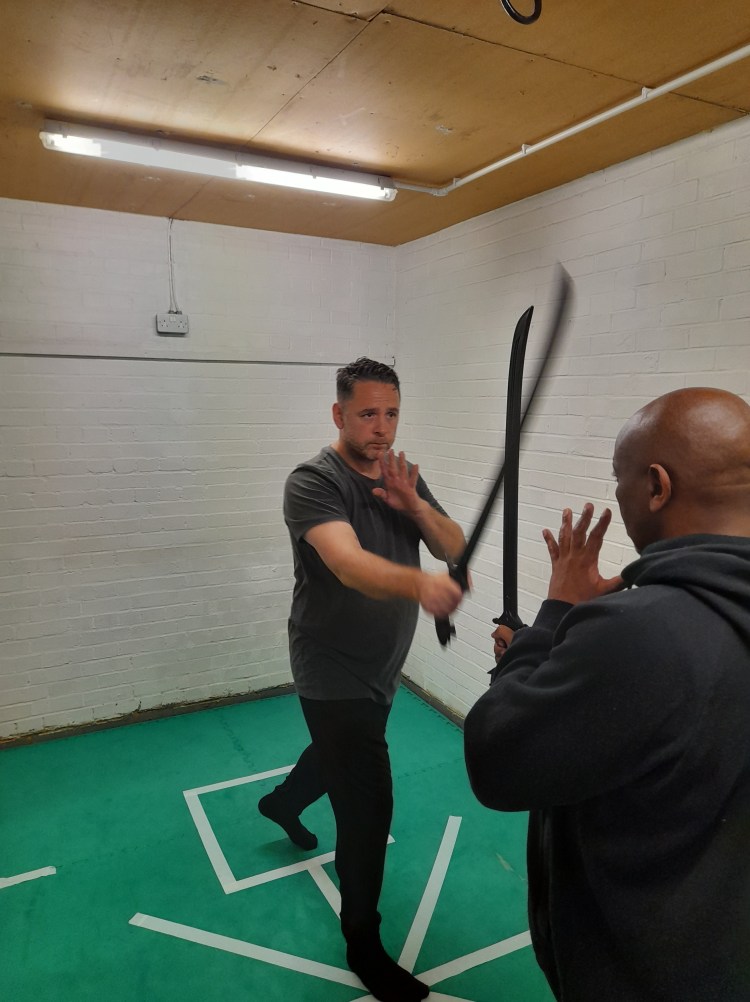
KORA Sword & Dagger Class This class focuses on traditional weapons training, helping preserve these arts for future generations. Sessions cover sword, stick, and dagger work. They also include knife defence. The techniques draw from Filipino Martial Arts (FMA) and European systems.
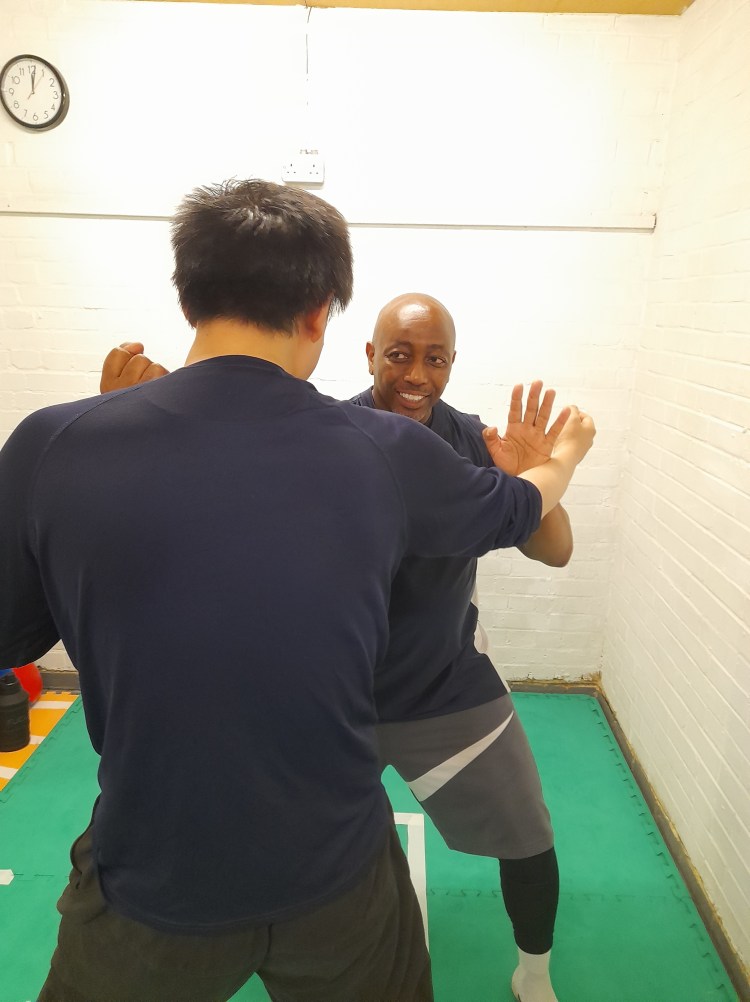
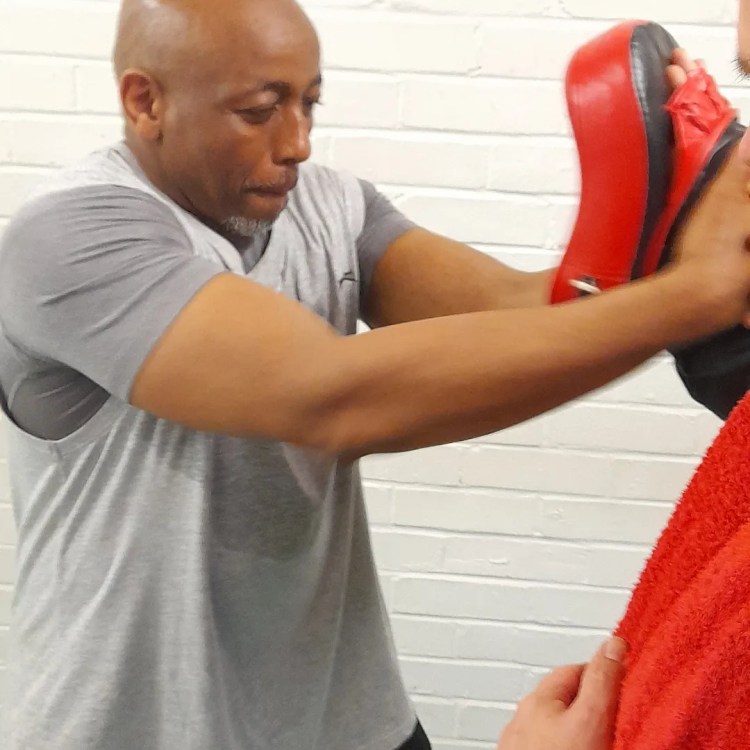
KORA Practical Self-Defence Class This class focuses on realistic, practical self-defence skills drawn from both traditional and modern systems. Training includes Contact Management for personal safety. It also covers Pencak Silat, dagger work, and grappling (Lutte). Additionally, kickboxing is influenced by Savate with a Basque flavour.
KORA Pencak Silat Class This class is dedicated to preserving authentic Pencak Silat from Banten and West Java. Training draws from Serak and Sera, with a strong emphasis on practical self-defence. The group also benefits from regular workshops led by our Pencak Silat instructor.
Class Warm-Up Development
The class warm-up was refined to include Nordic Breathing, Chinese Martial Arts body-opening sequences, and traditional KORA preparation. These changes have had a noticeable impact on student movement. They improve conditioning and overall performance. Now, they form a key part of our training method.
Year Structure
The teaching year now starts in January. There is a reset in September. This structure makes it easier for beginners to join. It also allows established students to progress without disruption.
Safety & Outcomes
Safety standards have remained excellent, with no major injuries recorded throughout the year. Several students have successfully applied their self-defence training in real-world situations, demonstrating the effectiveness and responsibility of the training system.
Most importantly of all, we all had fun and improved.
I was very lucky. I managed to slot in a podcast with Johnny Silmon whilst resting between jobs and job interviews. Please go and watch on YouTube, and if you can, like it, it helps the algorithm get the episode out.
I am very grateful to Johnny for giving me a space to chat. This is especially considerate as he is currently away with his work.
This will also answer a few FAQ about my history in the arts, etc. We managed to cover quite in an hour. Mainly about Pencak Silat and our weapon arts that we teach at KORA.
So far, all the feedback has been good; hopefully, it will generate some interest in our art.
Please pop over and like it and spread it around as much as you can.
There’s still time to make 2025 count. Begin training in martial arts that build real-world skills. They also enhance confidence and the ability to protect oneself.
Killick Off Road Arts — Saturday Training Schedule
All classes are 55 minutes.
09:00 — Three-Amigos Sword & Dagger
Short Sword • Dagger • Stick Fighting
Develop precision, coordination, and close-quarters weapon skills.
10:00 — KORA Pencak Silat
Self-defence • Sera (with a K) • MMA • Grappling
A high-energy blend of striking, clinch work, and ground control.
11:00 — Pencak Silat Sera
Traditional Sera training focuses on flow, power, and practical application.
Start now and stay ahead of the post-Christmas surge. Your training begins the moment you step onto the mat.
For most of my years studying and researching martial arts, I’ve kept detailed notes. Sometimes I took notes during training. Most often, I reflected quietly afterwards. Writing by hand helps me learn and remember. For the past four decades, I’ve kept a handwritten journal. Later, I typed everything up to store digitally.
The video below gives a great overview of my process and saves me from writing several extra pages.
As a teacher, I’ve spent years refining how I present information to each student. Everyone learns differently. I take time to understand a new student’s motivations, goals, preferences, and integrity before they join a class. I use the same care when training teachers.
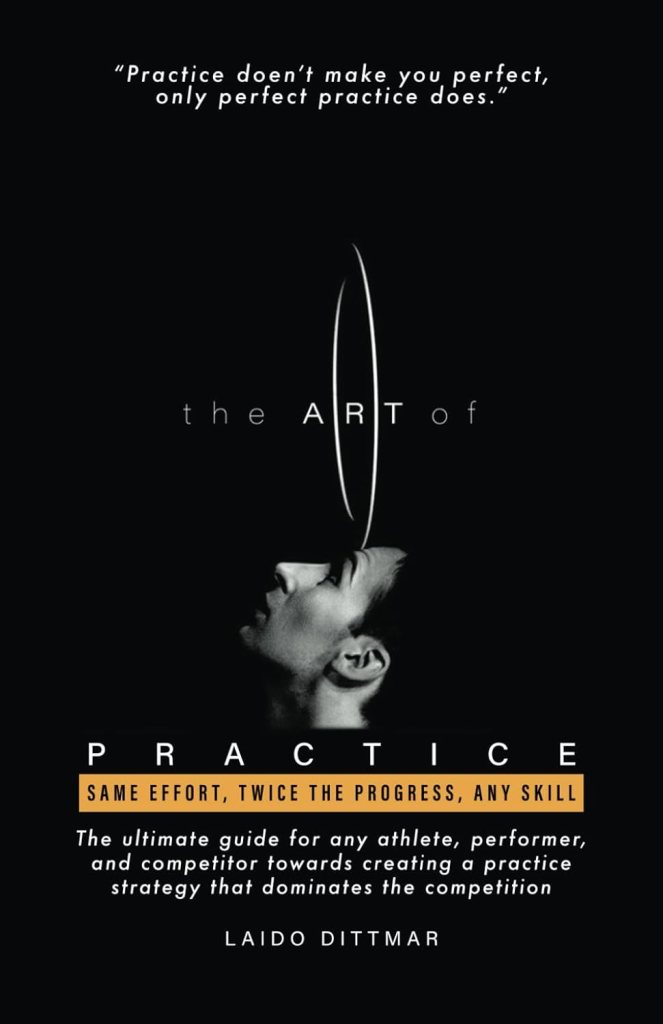
Over the last six months, I’ve reshaped my class format based on insights from a recent book. The results have been excellent for my students. They have also been excellent for me.
In 2026, I plan to run more workshops and share our beautiful arts with a wider audience. If you’re curious about KORA or the arts I teach, I’d love to hear from you—please get in touch.


 Nevertheless, this style of Savate is tough on your own feet and legs during training. It is not everyone’s favourite. You can end up with feet that look like a ballet dancer’s!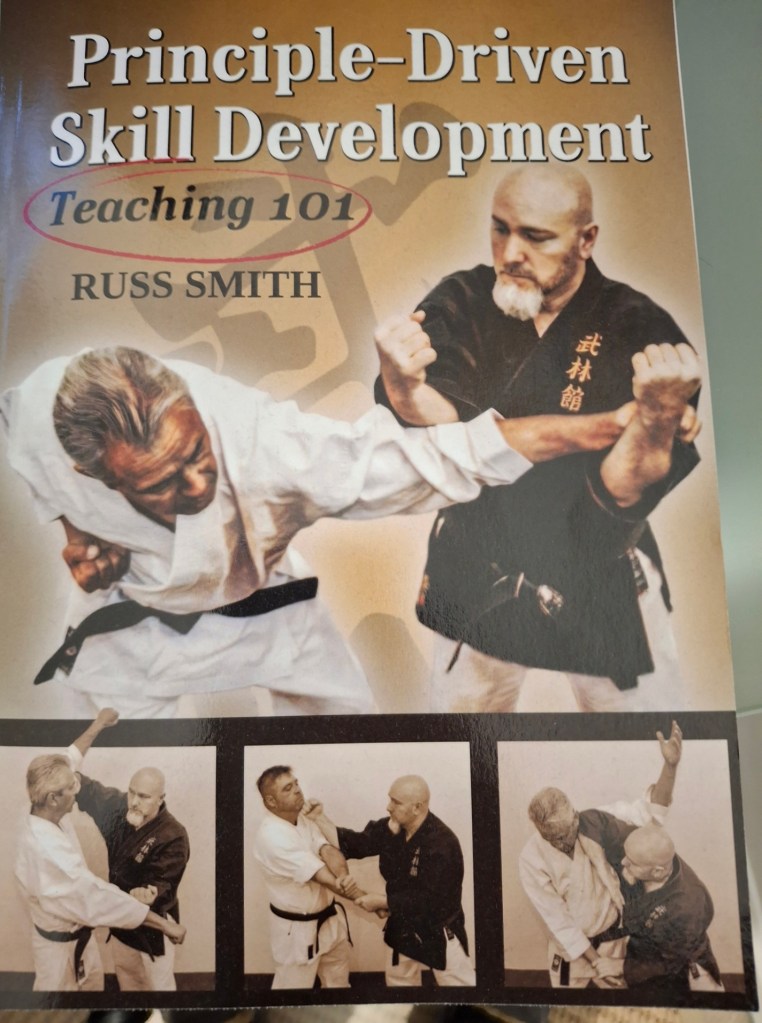







 Killick Off Road Arts